
SALES & OPERATIONS PLANNING
Fill in the details below to view a Netstock demo
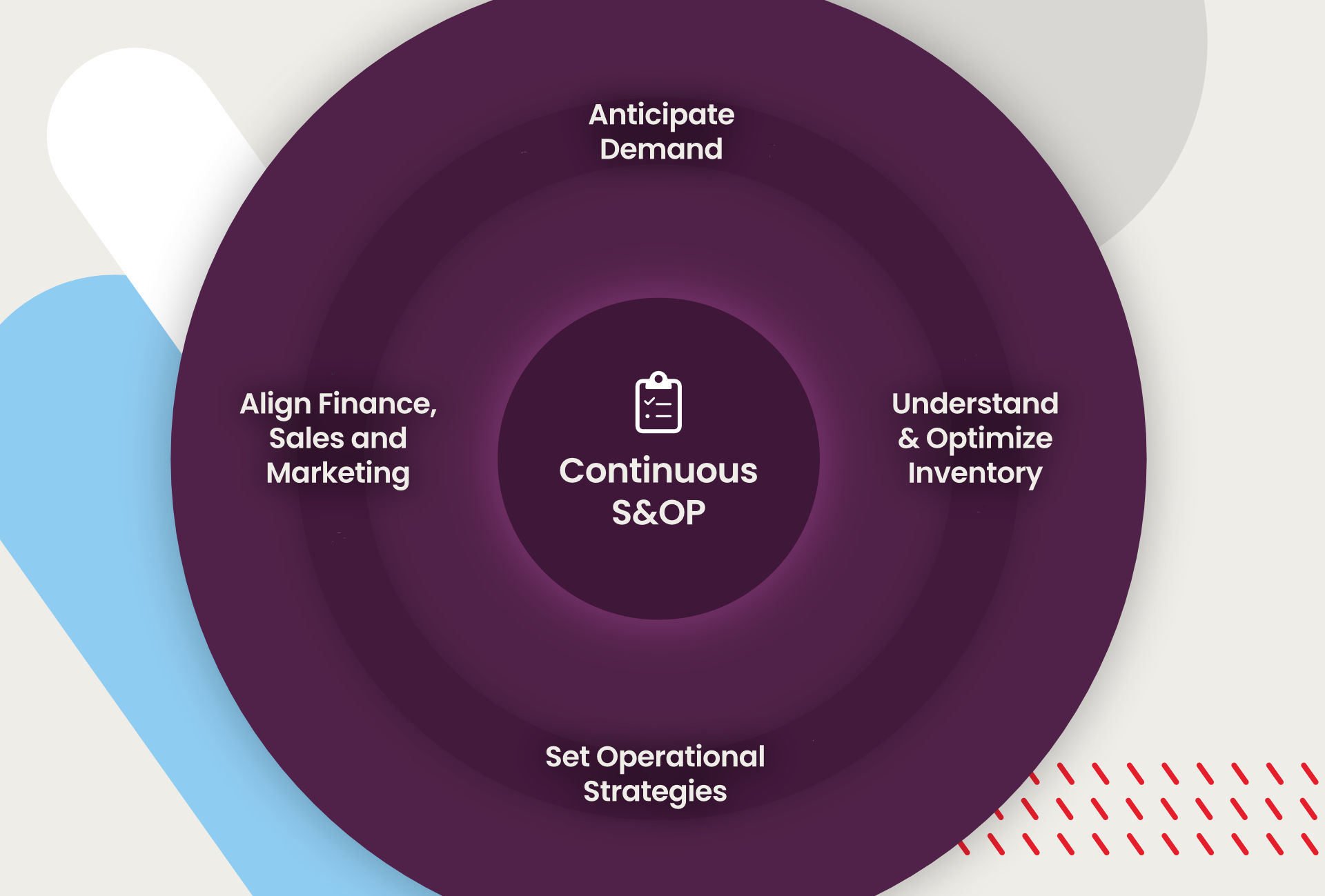
Business-wide synergy with S&OP
- Increase visibility into sales, inventory, operations, and finance data
- Improve accountability and forecast accuracy
- Optimize production and sourcing assignments
- Improve the effectiveness of new products and marketing initiatives
- Build custom dashboards to track key metrics and boost visibility
- Quickly change scenarios and analyze outcomes
Netstock provides core capabilities to drive intelligent S&OP
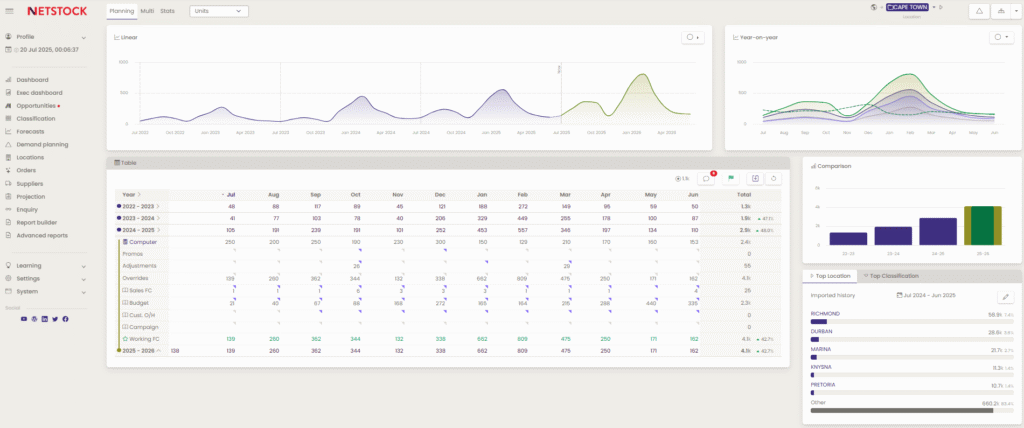
Collaborative demand planning
S&OP starts with automated, expert forecasts that get smarter over time. Combine data-driven insights with input from across the business to create a consensus, reliable demand plan for operational execution. You have full control. Forecasts can be generated for any product, channel, or region, and in both financial and operational units. When demand and operational planning work together, your teams get a cohesive framework for faster, smarter decisions.
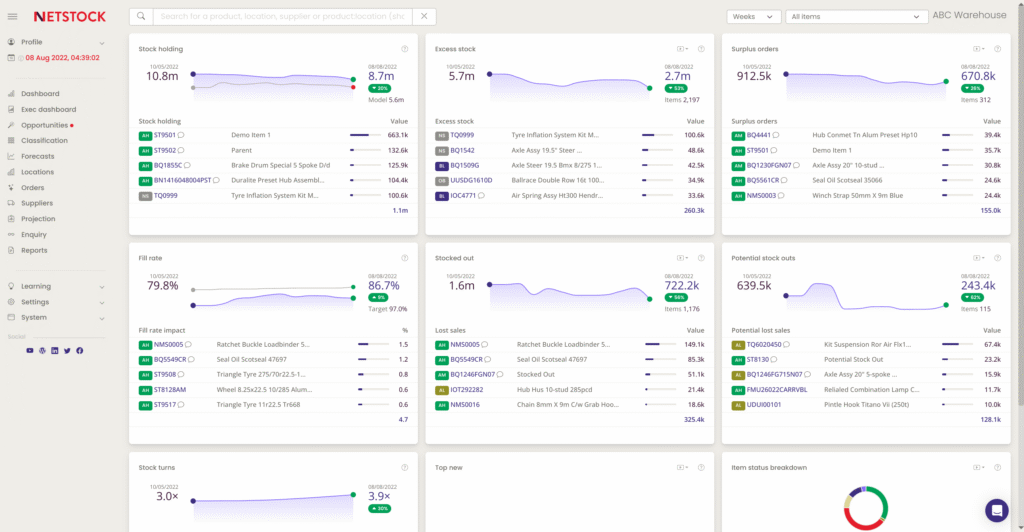
Intelligent inventory planning
Netstock consolidates ERP data into a single, SKU-level view, giving you clear insight into stock-outs, excess inventory, and their impact on working capital. With this visibility, finance, operations, and procurement can make informed decisions, prioritize actions, and work more efficiently across the business.
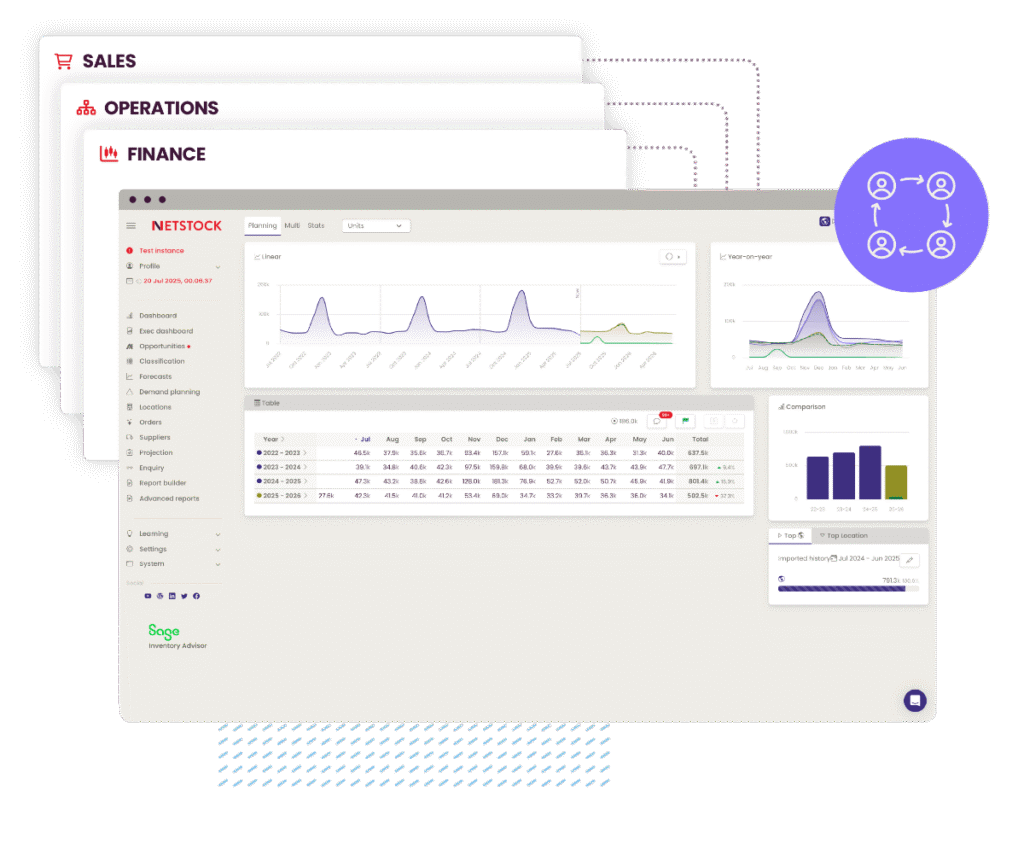
Centralized planning & accountability
Break down silos and align operations, sales, and finance in one place. From a single dataset, you can streamline S&OP sessions and make planning more efficient. Connect day-to-day actions to strategic goals so the S&OP plan seamlessly feeds into your operations.
Our solutions
Netstock has the solutions you need to help you achieve and manage optimal supply and demand levels.
 Inventory
  Inventory
  Inventory
  Supplier
  Demand
  S&OP
S&OPFAQs about S&OP
Sales and Operations Planning (S&OP) is an integrated business management process that drives organizational consensus to balance supply and demand. This collaborative process aligns various operational areas such as sales, marketing, product development, manufacturing, procurement, finance, and accounting. Typically conducted on a monthly basis, the S&OP process delivers an updated, rolling operational plan and demand plan that extends 18 to 36 months into the future. By harmonizing these diverse functions, businesses can create a cohesive operations plan that enhances overall efficiency and responsiveness
Integrated Business Planning (IBP) is a comprehensive approach that aligns sales, operations, and finance to optimize business performance. The benefits of IBP include:
- Improved forecasting accuracy
- Increased revenue and profit
- Better supply chain management
- Improved collaboration and communication across departments
- Enhanced decision-making
IBP enables organizations to make informed decisions by providing real-time visibility into sales, operations, and finance data. This holistic view is essential for gaining a competitive advantage in a dynamic marketplace, allowing businesses to adapt swiftly to changes and maintain a robust supply chain network.
The S&OP process follows a progression of steps designed to balance supply and demand effectively:
- Workspace preparation: This initial phase involves gathering and consolidating data from various sources.
- Demand planning: Generate updated statistical forecasts that reflect current market conditions.
- Supply planning: Balance customer service objectives against inventory and operating costs to create efficient supply plans.
- Plan review and reconciliation: Fine-tune and improve plans through collaborative review sessions.
- S&OP plan finalization and release: Present optimized plans to senior management for approval and implementation.
This structured approach is a critical component of supply chain management, enabling businesses to respond quickly to changes in demand and supply. By integrating sales, operations, and finance, the S&OP process helps businesses reduce costs, improve efficiency, and increase revenue.
Implementing S&OP requires a structured approach that involves the following steps:
- Define the scope and objectives: Clearly outline the goals and boundaries of the S&OP process.
- Identify key stakeholders: Determine the roles and responsibilities of all participants involved in the process.
- Develop a comprehensive data management plan: Ensure accurate and timely data collection and analysis.
- Design and implement the S&OP process: Establish the procedures and tools needed for effective S&OP.
- Train and educate stakeholders: Provide necessary training to ensure all participants understand the S&OP process.
- Monitor and evaluate effectiveness: Continuously assess the performance of the S&OP process and make improvements as needed.
While implementing S&OP can be challenging, the benefits of improved forecasting accuracy, increased revenue, and better supply chain management make it a worthwhile investment. By following a structured approach and leveraging the right tools and technologies, organizations can successfully implement S&OP and achieve their business objectives.
Netstock’s S&OP capabilities align demand forecasts with capacity planning and financial goals, creating a unified plan across all functions. By integrating sales projections with operational constraints, businesses balance supply, demand, and budget targets while maintaining agility to respond to market changes.
Ready to get started?
Discover how Netstock’s Predictive Planning Suite™ accelerates inventory planning.
Watch Demo
