

Food and Beverage Industry:
▸ Table of contents:
0%
Effective demand and supply planning is crucial in the food and beverage industry. It ensures the efficient delivery of perishable goods from farm to table while meeting consumer demand and maximizing profits.
Imagine the journey of a cup of coffee from the coffee bean farm to the customer’s cup. It starts with careful cultivation and harvesting, followed by meticulous processing and distribution across continents. This journey highlights the intricate links of the food and beverage supply chain, where every step, from sourcing raw materials to delivering the final product, is critical. Effective software to manage demand and supply planning is crucial in optimizing this process.
1. Understanding the challenges
The challenges faced by food and beverage manufacturers are diverse and demanding:
- Demand uncertainty: Fluctuating consumer preferences and market trends make accurate forecasting challenging.
- Competition and pricing pressures: Intense market competition and price sensitivity require agile pricing strategies and cost-effective supply chain operations.
- Manual processes: Reliance on outdated manual processes, such as working on spreadsheets, leads to inefficiencies and errors in inventory management.
- Short shelf life & expiry: Perishable goods necessitate precise inventory management to minimize spoilage and waste.
- Disruptions: Unexpected events such as natural disasters or supplier issues can disrupt supply chains, impacting product availability.
- Seasonality and variability: Seasonal demand fluctuations and product variability require adaptive supply chain strategies.
- Transportation: Delays and inefficiencies in logistics affect delivery schedules and product quality.
How can you tackle these challenges?
It’s crucial to implement advanced demand and supply planning software. The right software accelerates visibility across your supply chain, simplifies operations, and helps maximize profits, making your supply chain more robust in the face of future uncertainties
Learn more about Netstock's suite
2. Efficient demand and supply
To succeed in today’s food and beverage industry, manufacturers must adopt smart strategies for managing demand and supply efficiently. The global supply chain is complex and delicate, so having the right processes in place is vital to keeping your business moving forward and profitable.
As they say, sticking with old ways won’t lead to new results.
Here are some key processes you should be doing in your business:
- Data-driven forecasting: Utilize historical data, market trends, and predictive analytics for accurate demand forecasting.
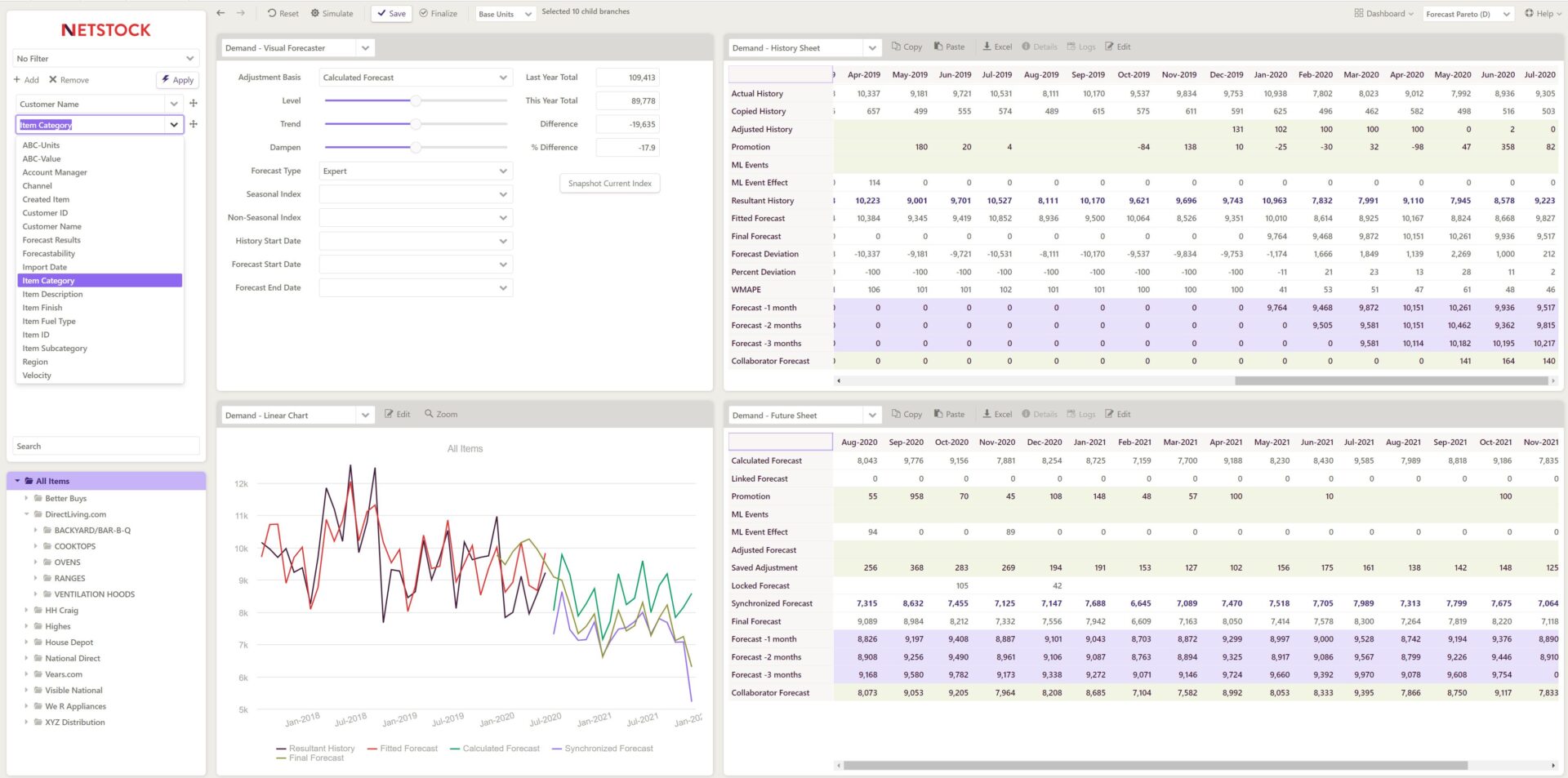
- Flexible forecasting: Create dynamic forecasts by product, group or channel.
- Collaborative planning: Foster collaboration between sales, marketing, production, and logistics teams to align forecasts and inventory plans.
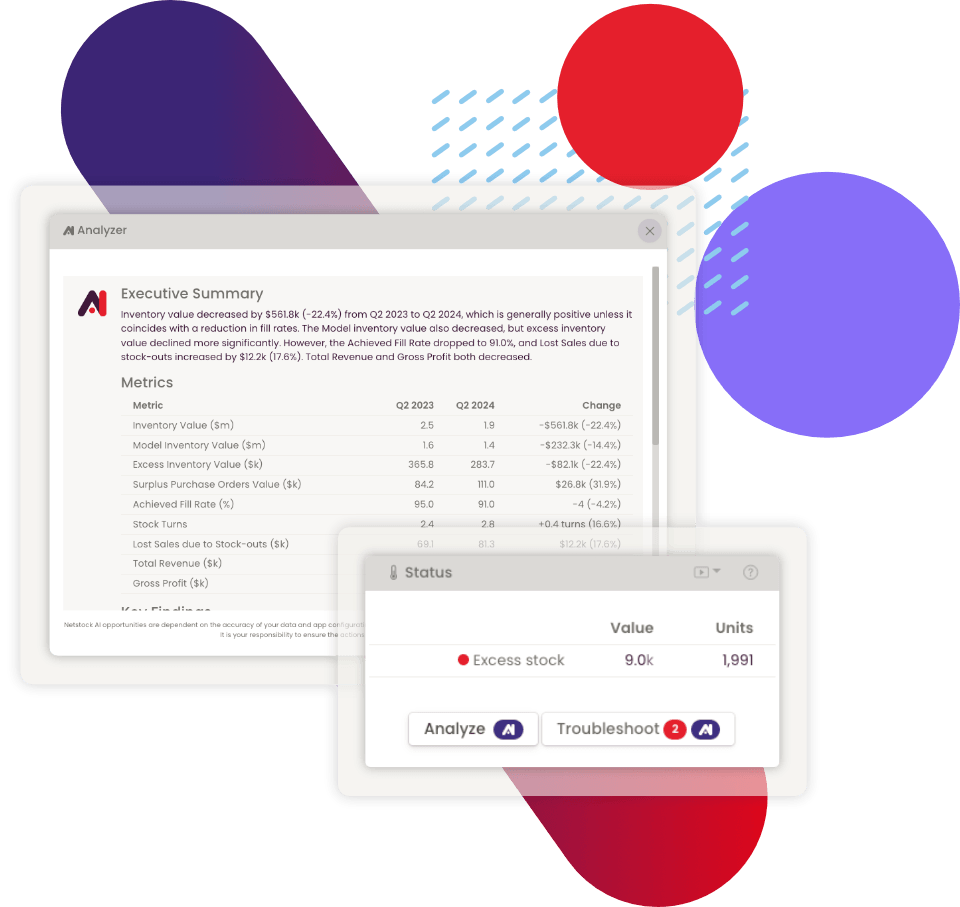
- Inventory optimization: With complete inventory visibility, balance inventory levels to reduce stock-outs or excess inventory to ensure demand is met in full and on time.
- Agile production and distribution: Implement agile manufacturing and distribution processes to respond quickly to changing demand patterns.
- Supplier relationship management: Monitor supplier performance and maintain strong supplier relationships for timely deliveries and competitive pricing.
- Capacity planning and S&OP: Align production capabilities with demand forecasts through capacity planning and integrate with sales and operations planning for synchronized planning across functions.
- Continuous improvement: Regularly review and optimize supply chain processes based on performance metrics and scenario planning to mitigate risks and improve efficiency.
You can achieve success with demand and supply planning:
- Minimized waste: Effective planning reduces excess inventory and ensures perishable items are used before expiration, minimizing waste.
- Meet consumer demand: Consumers expect consistency and availability of their favorite food and beverage products. Good planning ensures products are available when and where consumers want them.
- Cost control: Efficient planning optimizes inventory levels, reducing storage costs and the risk of stock-outs or overstock situations that can lead to financial losses.
- Quality and safety: Proper planning helps maintain product quality and safety standards by ensuring products are fresh and meet regulatory requirements.
- Competitive advantage: Businesses consistently deliver products on time and in the right quantities to gain a competitive edge in the market, building customer loyalty.
- Supply chain resilience: Planning helps mitigate risks associated with supply chain disruptions, ensuring continuity of supply even during unforeseen events.
Being able to adjust safety stock based on statistical modeling using history and forecast deviation instead of just a number of days of coverage has improved our inventory fill rate from 90.9 to 98%.
-The Little Potato Company
3. Selecting the right software
Understanding ERP functionality
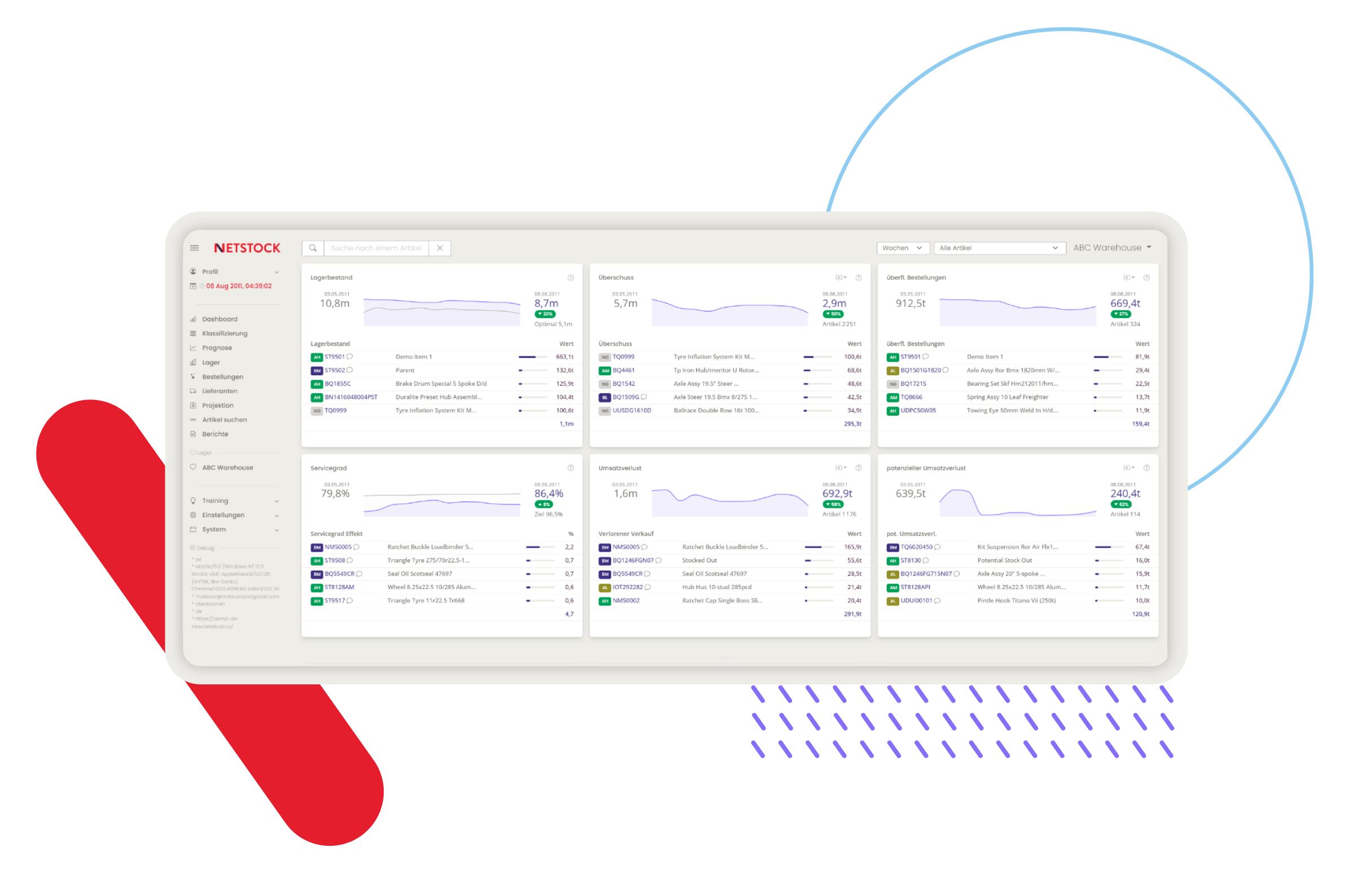
While ERP software tracks inventory levels, locations, and movements, it doesn’t tell you how much inventory you should have. ERP systems aren’t designed for complex demand and supply optimization. They lack predictive insights and advanced notifications, leading to stock-outs or excess inventory without early warnings
Demand and supply planning solutions
When it comes to choosing the right software, you require a strategic approach tailored to the unique needs of your business. You need to consider:
- Define requirements: Assess specific challenges and goals related to demand forecasting, inventory optimization, and supply chain visibility.
- Research solutions: Evaluate software solutions offering robust features for the food and beverage industry.
- Demo: Request a demo to assess usability, integration capabilities, and alignment with business objectives.
- Implementation and support: Ensure the software provider offers comprehensive implementation support and ongoing customer service.
We’ve written a more in-depth article about selecting the right software solution in our blog.
Read the guide
4. Key software features checklist
With the right software features, managing your inventory is like having a finely tuned recipe. You can quickly adjust ingredients, immediately see the impact of new products or promotions, and always be prepared to adapt to unexpected changes in the market.
Here are the necessary features your software should offer:
- Flexible forecasting: Create dynamic forecasts by product, group, sales channel, and key customers.
- Forecast in different units of measure: Work from a single set of numbers and dynamically jump between units and financial conversions.
- Manage expiry dates: Monitor, manage, and analyze stock expiry effortlessly. Automatically remove expired items, sell them to specific customers, and evaluate cost/revenue across channels, customers, or locations with predictive insights into future expiry periods.
- Batch and lot tracking: Easily manage inventory expiration by tracking lots, revealing when each batch will expire based on its unique lot and expiry date.
- Seasonal forecasting: Create forecasts that account for seasonality, even for items without sales history. Apply seasonality to items within a seasonal group, even if their individual sales history doesn’t show seasonality.
- Manage promotions or exception events while forecasting: Automatically increase your recommended orders in anticipation of a promotion or event.
- Optimize automated ordering: Use replenishment cycle and order size constraints (MOQs) to reduce stock-outs and excess inventory.
- Automatic and robust stock classification: Frees up time and resources to focus on the items that contribute the most to your bottom line.
- Find ad hoc transfer opportunities: Redistribute stock to where it’s needed most.
- Sales linking: Launch new products with a forecast based on similar products at the product or style level.
- Scenario planning: Create and compare multiple demand-supply scenarios and easily share them with stakeholders.
5. Smart demand and supply planning
Optimizing demand and supply planning in the food and beverage industry is crucial for staying competitive and satisfying customers.
Here’s what you can do next:
- Evaluate your current processes: Examine your operations closely to identify areas where better planning could make a big difference.
- Find the right solution: Look for software that fits your needs, such as flexible forecasting and inventory optimization designed for food and beverage businesses.
- Plan your implementation: Map out how you’ll introduce these tools, including training and support, to ensure a smooth transition.
- Keep improving: Continuously monitor your performance and use insights to fine-tune your strategies for even better results.
By following these steps, you’ll streamline operations, cut costs, and consistently meet demand.
Ready to accelerate your supply chain efficiency?
Contact Netstock and find out how our solutions can help optimize your demand and supply planning.
Get Started
More guides

5 Steps to Managing Your Suppliers like a PRO!
Effective supplier management goes beyond transactions; it’s about collaboration and shared goals.
Read More
Navigating Tariffs: How SMBs Can Stay Prepared, Proactive, and Profitable
Struggling with rising tariffs and supply chain chaos? Discover how SMBs are tackling today’s biggest planning challenges.
Read More
From Chaos to Control: How Predictive Analytics Transforms Inventory Management
Imagine this: You’re a supply chain manager at a mid-sized retail company in December.
Read More

Make Smarter Inventory Decisions with Generative AI
Picture this: A boutique owner stares at her holiday inventory plan, remembering last year’s costly mistakes.
Read More
5 Hidden Causes of Excess Inventory
A practical approach for manufacturers to navigate supply chain disruptions by enhancing inventory visibility, improving
Read More
AI+Inventory. Built for your business.
Accelerate supply chain planning for building supplies with predictive forecasting software.
Request a demo and see Netstock in action.
Ready to start your inventory AI journey?
Discover more about Netstock’s demand and supply planning software
