Reducing lead times in the supply chain – the time it takes to move orders from request to availability for sale or production – is key to keeping customers happy and keeping inventory costs under control.
Inventory planners are always walking a fine line: ensuring there’s enough stock to meet customer demand without spending too much on inventory. With demand and supply constantly shifting, you need clear visibility at every step in your supply chain. Long lead times can quickly become the weakest link, disrupting your inventory and slowing you down.
Good supply chain management is a team effort. It starts with combining information from both the demand and supply sides, analyzing the data, and using those insights to plan smarter. Then, by using these proven strategies and understanding the nuances of lead-time reduction, you can achieve your business goals.
Key takeaways
- Long lead times lead to more than delays. They can increase inventory risk, too. These increased or variable lead times often force businesses to hold more safety stock, tying up cash and increasing carrying costs.
- Lead time variability matters more than averages. Even if average lead times appear acceptable, the inconsistency they introduce can create planning risk, driving up buffers and weakening service performance.
- Supplier performance and monitoring directly shape replenishment decisions. Accurate, up-to-date lead times are vital for setting reorder points and planning your order frequency to avoid reactive expediting.
- Cutting lead times requires improved planning, not just faster transport. Better forecasting and clearer communication can deliver more impact than costly logistics shortcuts.
- Dynamic inventory policies outperform static assumptions. Regularly review lead times and safety stock to ensure your inventory plans align with changing demand, supplier behavior, and business priorities.
What is inventory lead time?
Inventory lead time is a core component of supply chain lead time. It encompasses the period from when you place a purchase order with a supplier (including internal approval processes) until the order becomes available for customer purchase. Your lead time directly affects your overall inventory fill rate – your ability to service customers with available stock.
Businesses must account for more than just the supplier production time. Lead time in shipping and delivery can affect how long inventory is unavailable to consumers.
Inventory planners must account for potential delays that impact lead times at various stages:
| Types of lead time to monitor at various stages | |
|---|---|
| Lead time type | What it represents |
| Supplier lead time | Time from when the supplier receives your purchase order until the order ships. |
| Production lead time | Time from when raw materials are requested from your warehouse until products are available for production. |
| Delivery lead time | Time required to collect finished products from dispatch to delivery to customers. |
Quick answers to help you reduce lead times
What does lead time mean in the supply chain?
Lead time = the time required to first generate, process, and place the order + the suppliers’ quoted or anticipated delivery time
When do you need to factor in lead time into your inventory planning?
Factor lead time into inventory planning when you’re calculating:
- Reorder level
- Cover forward or order-up-to-quantity
- Safety stock
To effectively track lead time performance, implement:
- A robust demand-and-supply planning solution to monitor supplier lead times
- Functionality that can quickly update lead time changes in your inventory management platform
Remember that each stock item has an assigned supplier with specific lead times. Items sourced from multiple suppliers will have varying lead times. Consistently late deliveries impact safety stock requirements and increase inventory costs.
Five steps to reduce lead times in your supply chain
If you want to reduce lead times, focus on two things:
- Understand the pressures and challenges facing your suppliers and customers
- Review your inventory processes and making improvements where needed
You can only achieve an effective supply chain through collaboration.
Your key focus should be gathering information from your demand and supply processes, analyzing the data, and then applying it to take action and make the best possible planning decisions for your inventory.
Take this information with you as you follow these 5 steps to reduce lead time in your supply chain.
Step one: classifying your inventory
In essence, there are two approaches to reducing lead times:
- Understand the pressures and constraints your supply and demand face, and use that information.
- Review your inventory processes to make the necessary changes to adapt and optimize your supply chain.
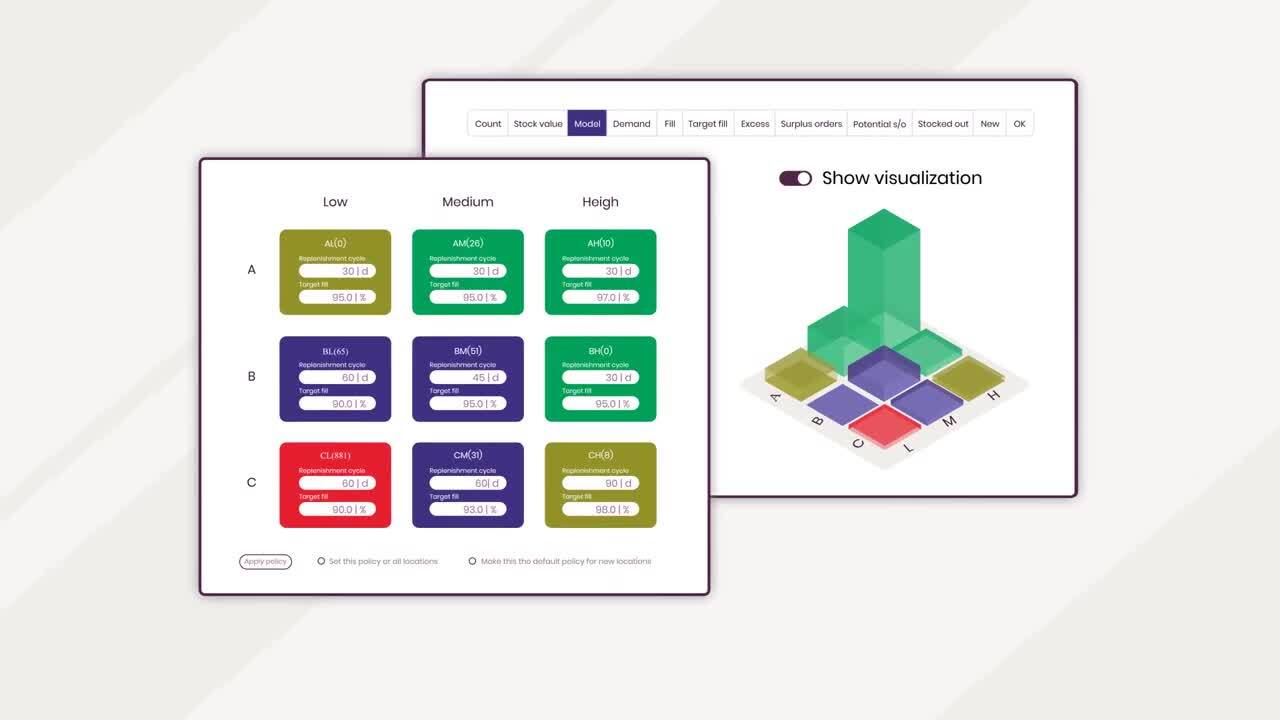
No matter what strategy you choose, the first step in reducing lead times is classifying your inventory.
Classifying inventory helps planners focus on SKUs where vendor and ordering lead times have the greatest impact on customer service and cash flow. Proper inventory classification helps identify items that make the greatest business contribution.
The 80/20 rule applies here: focus on the 20% of SKUs generating 80% of sales.
Classification helps reduce lead time impacts by allowing you to:
- Regularly review projected lead times for critical products before ordering
- Group essential products with similar delivery characteristics
- Avoid relying solely on historical data for individual items
- Negotiate with suppliers to maintain a sufficient stock of key items
Watch how Netstock automatically classifies your inventory.
Step two: Partner with reliable suppliers
Understanding your suppliers and their challenges is essential for adapting inventory processes and reducing lead times. Supplier lead time consistency often matters more than speed because unreliable vendors introduce risk that must be offset with higher inventory buffers.
Optimize your supplier network by:
- Reviewing supplier performance metrics
- Eliminating consistently unreliable suppliers
- Maintaining regular communication with reliable partners
- Sourcing alternative suppliers with immediate stock availability
- Reviewing terms, conditions, and minimum order requirements
- Sharing sales forecasts with suppliers
- Evaluating air freight versus sea freight options when appropriate
Monitor supplier reliability and reduce supplier risk with dynamic safety stock.

Step three: improve internal and external communication
With your team: Inventory management requires input from sales, marketing, and operations. Schedule weekly discussions covering:
- Upcoming sales or promotional campaigns
- Market intelligence affecting suppliers and lead times
- Potential supply chain disruptions
With your customers: Provide immediate updates about potential order delays. While this won’t directly reduce lead times, it builds customer loyalty and trust.
Step four: optimize order frequency
Optimizing order lead time and lead time for ordering allows businesses to better balance frequency against minimum quantities and safety stock requirements. Consider ordering smaller quantities more frequently to better manage long lead times and reduce risk.
While bulk ordering might seem to prevent stock-outs, consider these consequences:
- Increased storage, labor, and insurance costs
- Greater risk if large orders face delays
- Capital tied up in undeliverable inventory
When determining the best ordering strategy:
- Factor in supplier minimum order quantities
- Identify items falling below minimum levels after lead time
- Calculate appropriate safety stock for key products
Here’s a practical example:
For an item forecast to sell 100 units monthly with:
- 20-day lead time
- 15 days of safety stock
- 30-day replenishment cycle
From order placement until the end of lead time, you would sell 67 units (20 days at 100 units/month).
Safety stock would be 50 units (15 days at 100 units/month).
The reorder point calculation becomes: REORDER POINT = Lead Time (67 units) + Safety Stock (50 units) = 117 units
Step five: maintain dynamic safety stock levels
Maintaining appropriate safety stock for high-priority items protects against extended supplier lead times. Avoid the “set-and-forget” approach to safety stock.
Regularly review safety stock levels because:
- Supplier risks and lead times change
- Forecasts evolve
- Business objectives shift
Ideally, review safety stock daily using a reliable automated inventory planning solution.
Measuring ROI from lead time reduction
Once you’ve taken these steps, it’s critical that you track the impact. Reducing lead times delivers measurable financial benefits:
- Decreased inventory carrying costs
- Reduced safety stock requirements
- Improved cash flow
- Enhanced customer satisfaction
- Increased sales from better product availability
Companies implementing strategic lead time reduction typically see 15-30% reductions in inventory holding costs while maintaining or improving service levels.
Lead time performance: A critical supply chain metric
Lead time performance measures supplier deliveries based on whether they arrive early or late. Lead time’s impact becomes most visible when variability rises, forcing businesses to carry more inventory to protect service levels. Since lead times are essentially external variables determined by suppliers, you don’t have complete control over them, making monitoring and measurement crucial.
Building supply chain resilience through lead time management
Strong supplier relationships are vital for effective inventory management. Supplier performance directly affects your ability to respond to demand changes, replenish stock efficiently, and avoid costly stockouts.
By implementing these five strategies – classifying inventory, partnering with reliable suppliers, improving communication, optimizing order frequency, and maintaining dynamic safety stock levels – you can significantly mitigate the risks of extended lead times.
Next steps to optimize your supply chain
Ready to gain greater visibility into supplier performance and reduce lead times? Netstock’s inventory optimization platform provides:
- Automated supplier performance tracking
- Dynamic safety stock calculations
- Intelligent order recommendations
- Real-time inventory insights