
▸ Table of contents:
0%
Optimizing and planning inventory today requires speed, accuracy, and visibility to adapt and respond to change. The right software will help your business navigate supply and demand variability, ensuring your business is better prepared to meet customer demand.
Balancing inventory investment and stock availability while factoring in supply and demand risk adds complexity and leads to the inventory planning dilemma.
What is the inventory dilemma?
Even with an ERP system to help with your inventory replenishment, you discover your inventory levels are not balanced. You find yourself fighting fires daily, having to deal with one or many of these scenarios:
- Holding too many slow-moving items
- Working with unreliable suppliers makes it difficult to meet the demand
- Experiencing stock-outs of high demand items
- Having too much safety stock for the incorrect items
- Needing to forecast for new products
Adding to this dilemma, you are managing inventory on complex spreadsheets. You are most likely frustrated with this process, and the time it takes to plan the optimal inventory levels needed to reach your target fill rate.
ERP software has not been designed to manage the complexities of optimizing inventory. It won’t provide predictive insights or notify you ahead of time of any potential challenges with your inventory levels.
The solution?
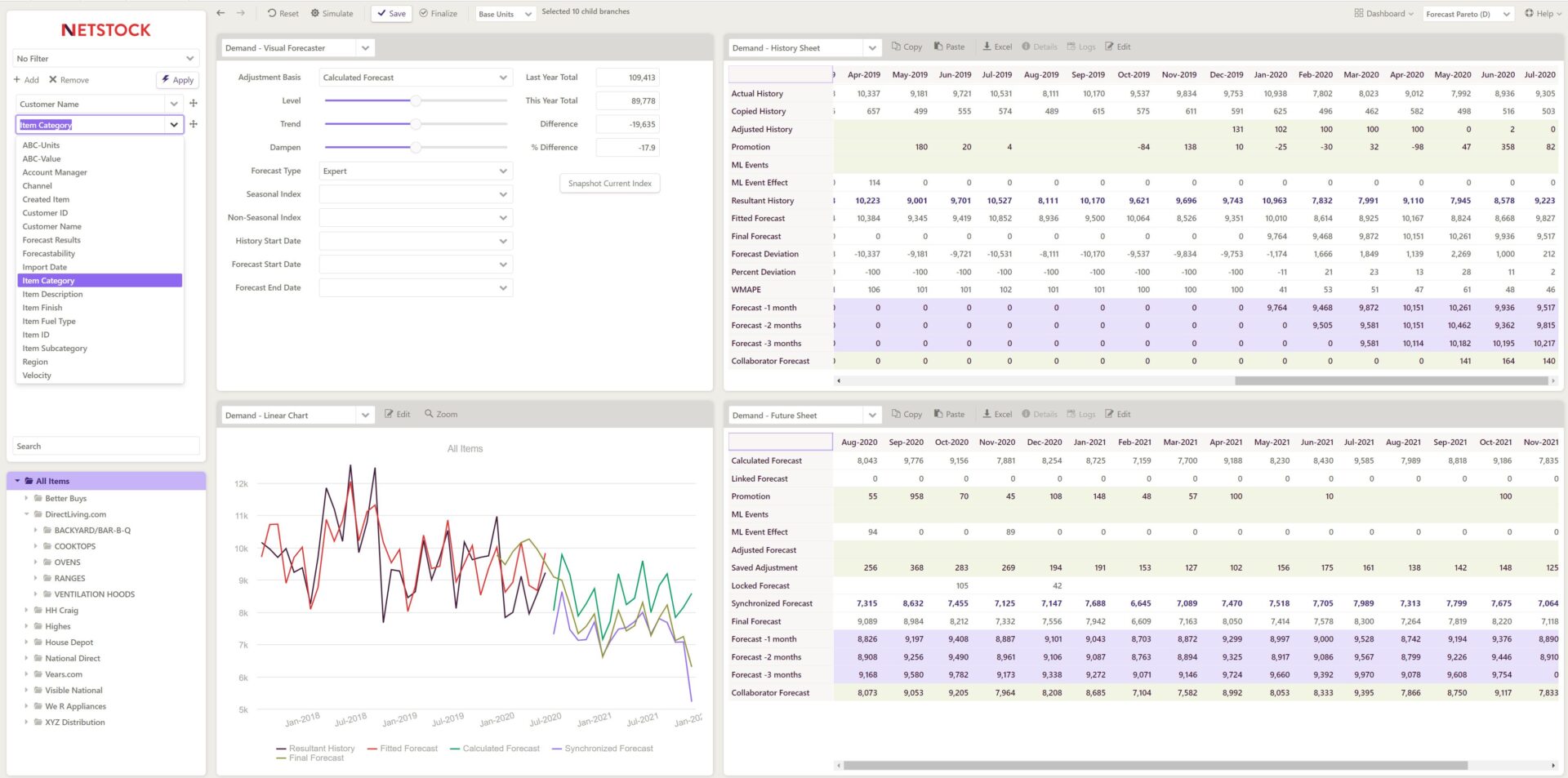
Invest in an add-on demand planning solution that draws data from your ERP. This solution needs to provide powerful insights and create a centralized forecasting and planning platform, ensuring your business is market-ready.
Learn more about Netstock's suite
The data challenge
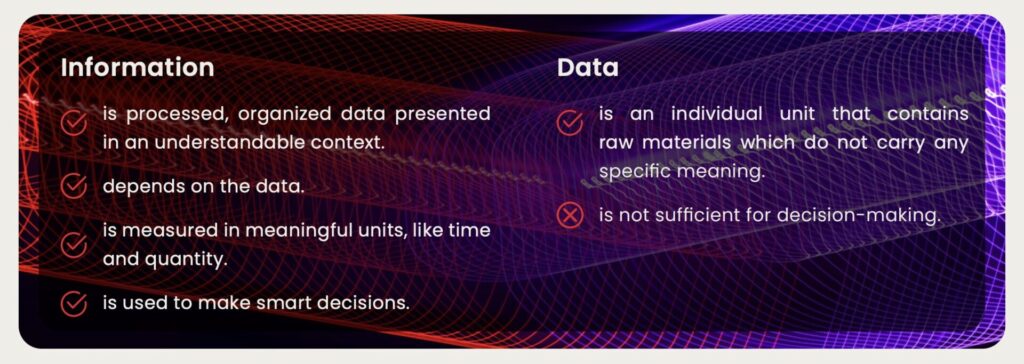
Today, more supply chains are utilizing data-driven technology to accelerate their operations. Data is a powerful resource for your supply chain, providing visibility so that your business can be more prepared and adjust to changes, maintain inventory levels and identify new opportunities for the business.
A survey conducted by Gartner in 2020, identified that 70% of companies accelerated their digital roadmaps during the pandemic. Some leading supply chains have reached a point in their transformation journeys where they consider themselves ”digital first” in using technology to enable seamless customer experiences and automated supply and product management decisions.
1. Data needs to be accurate
Data has infinite value for your supply chain if accurate, accessible, understood, and used to identify actionable insights. Being diligent and committed to ensuring the data in your ERP is accurate will reward you for making smarter decisions to plan and manage your inventory. The lack of accurate data significantly hinders businesses, contributing to poor decision-making and lost sales and customers.
2. Data and your ERP software
The better you plan for demand, the better you serve your customers. But even the best data is useless if you can’t analyze and interpret it to make smart decisions.
The visibility you gain by having accurate data allows you to monitor:
- Key performance indicators (KPIs) to ensure you meet expected target fill rates
- Items that may run into stock-outs
- Open purchase orders flagging items that are potentially overstocked
- How well your suppliers are performing
Raw ERP data is static and requires hours of manual manipulation to interpret, update and plan, with tedious processes working from complex spreadsheets.
Simply, the process entails:
- Downloading data from your ERP into an Excel spreadsheet.
- The inventory and demand planning team will work off the same spreadsheet, adjusting and updating the spreadsheet, and then,
- Uploading the data back into the ERP system.
But, what could go wrong?
1: You need accurate data to download data into your spreadsheet
Incorrect stock balances make it nearly impossible to plan effectively, resulting in inaccurate order recommendations. The following data is critical to planning your inventory:
- Accurate stock balances allow for easy calculation of the net available stock.
Up-to-date sales data, including sales within the current month, enabling a forecast to be generated, reviewed and overridden. - In-progress transactions such as outstanding purchase orders, customer orders, and internal transfers, preferably time-phased, so order recommendations are actioned when required.
- Supplier ordering constraints, such as minimum order quantity or minimum order value constraints, are necessary when calculating order recommendations.
2. You need consistent data synchronization
Inventory spreadsheets consistently need synchronized data. When extracting, compiling, and consolidating information to feed into the spreadsheet (possibly even from multiple sources), the data must be relevant and synchronized. All of the “transactional” data must be extracted simultaneously.
For example, extracting stock balances at 9 am and outstanding purchase orders at 9:30 am might have severe implications for stock shortages and excess inventory.
- If the stock figure includes a purchase order (PO) received, but the purchase order data still shows that PO as outstanding, you have double-counted the quantity on the PO. If this happens, you could think you have enough in stock and on order, so there would be no recommendation to order when, in reality, you should be ordering.
- If the stock figure doesn’t include the receipt of the PO and the PO was no longer showing as outstanding in the PO data, you could order too much, as you have no visibility of the quantity on the PO.
3. You need correct inventory planning inputs
Another challenge is determining the correct planning inputs at a stock item level or item by location level.
Key inventory planning inputs…
- Lead time: the time from order placement until the item is in stock and available for sale.
- Inventory classification: whether the item should be stocked, non-stocked, or obsolete and showing the importance of each item.
- Safety or buffer stock: the dynamically computed stock level that is required to compensate for inaccurate forecasts and late delivery from suppliers.
- Order cycle: how frequently you plan to order this item.
Implementing Netstock as well as other process changes allowed us to complete our annual order cycle with our suppliers ahead of their yearly production capacity peak periods. Netstock helps manage our forecasts for each market and consolidates our global demand, providing us with recommended orders across our style range. What used to take weeks to refresh and review our data now takes a fraction of the time and allows us to make more timely decisions.
-Zhik
Bridging the technology gap
ERP software provides basic functionality, focusing more on stock control activities and identifying how much stock you have in the warehouse. ERPs typically provide “MIN” and “MAX” levels to calculate the quantity of stock to order.
ERPs provide a lagging indicator when something has gone wrong:
- You are out of stock of an item, and you cannot fulfill your sales obligations.
- You just received a purchase order, but it’s too much, and you’re now stuck with excess inventory.
- Halfway through the month, you run out of stock because your forecast was inaccurate.
Given the internal complexities of managing thousands of SKUs across multiple locations and ongoing external disruptions: can your business afford no visibility across its supply chain?
Or, would you rather have software that will notify you before any issues happen?
The spreadsheet headache
According to a McKinsey & Company survey in 2021, close to ¾ of supply-chain functions still rely on spreadsheets. These leaders are aware they need to make significant changes, with 90% planning to implement a new solution.
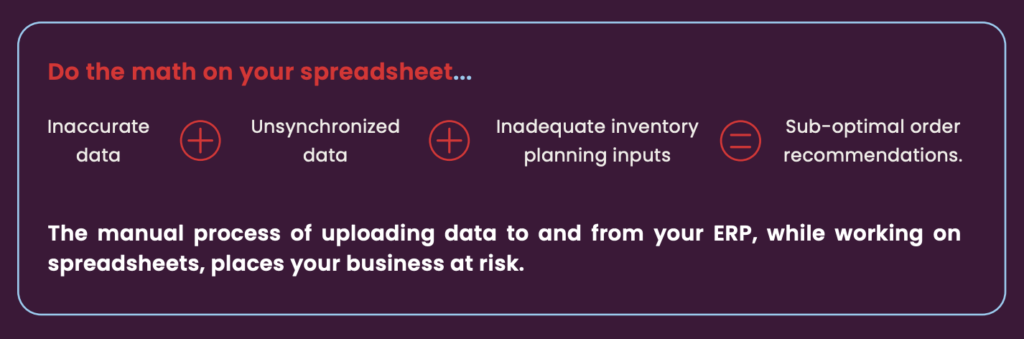
Spreadsheets serve a valuable purpose in business. However, working off spreadsheets places your business at risk when you need to manage inventory. If the wrong information is input, incorrect orders result in stock-outs or holding excess stock or both.
Limited collaboration: data errors occur when multiple people add and/or edit data on the same spreadsheet.
- Human error: mistakes can be expensive. If you order too much stock, your business will have excess inventory on a slow-moving product.
- Lack of security: increased cyberattacks can put your business and your customer’s information at high-risk.
- Inaccurate data: access to accurate information takes many hours to collate when consolidating data off many spreadsheets.
- Static: spreadsheets can’t enable agility, adjusting inputs to speed to market in response to disruption.
Your supply chain may be at the stage on the inventory maturity curve where you want to consider extending your ERP to provide better demand planning and forecasting functionalities. It’s essential that you first review the effectiveness of your inventory planning to identify the need.
Step 1. Identify your supply chain challenges
Take a deeper look into the functionality and results you are getting from your current solution and establish:
- What are your inventory challenges?
- Can your current system provide the necessary information and relevant recommendations to solve your inventory challenges?
Ask yourself the following questions:
- Do you waste money by over-ordering inventory?
- Are you experiencing long lead times, or do you carry seasonally affected items?
- How often do you run out of stock?
- Do you have visibility of your suppliers’ performance?
- How many hours per week or month does it take to extract sales and supplier data manually?
- Are you able to automate promotions and discounts?
- When you are about to run low on a stock item, do you get system alerts?
Step 2. Calculate your existing investment costs
If you are still managing your inventory on spreadsheets, calculate the workforce and hours it takes to plan your inventory and the monetary losses due to human errors.
Consider other vital aspects:
- How much money has mistakes cost your supply chain over the last 24 months?
- What is the current value of the excess stock you have on hand?
- How much extra transportation or freight costs have you incurred because you have stocked out of key items for your customers over the last 24 months?
- Do you know exactly how much money your suppliers owe you?
Source the best demand planning solution for your business, once you have identified your inventory challenges and calculated how much money you have lost.
What are the benefits of a demand planning solution?
A demand planning solution is an extension of your ERP. The sophisticated technology will do the heavy lifting, distilling, and prioritizing the information, so that you can make quick, confident strategic decisions.
With a demand planning solution, you’re able to:
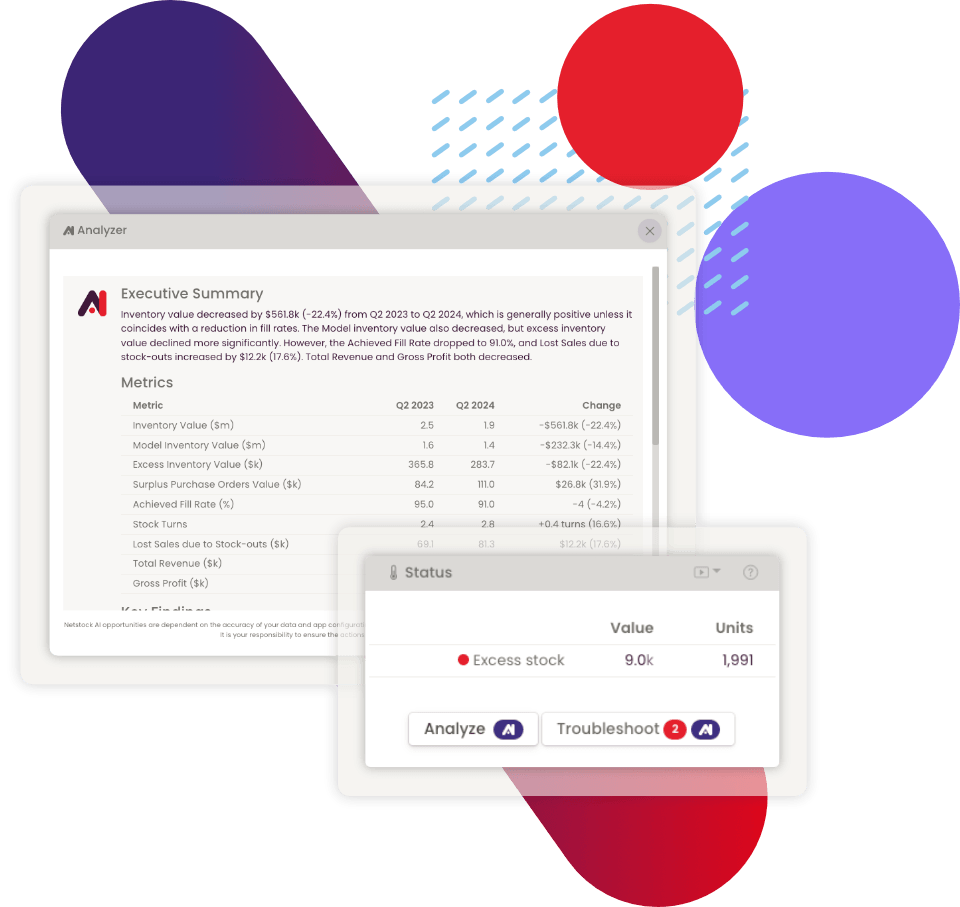
- Gain inventory visibility to monitor KPIs like fill rate and stock holding.
- Automatically classifies each SKU according to sales velocity and profitability, so you know which items need urgent attention.
- The software will automatically calculate the right amount of safety stock you need based on each SKU classification.
- Receive up-to-date order recommendations automatically.
- Generate reliable forecasts that factor in trends and seasonality.
- Forecast for up to 24 months and build proactive inventory plans that anticipate and factor in extended lead times.
- Measure suppliers’ performance and minimize lead time risk.
- Visibility of your bill of materials production, review and amend recommended purchasing plans/manufacturing.
Tips to encourage better software adoption
- Communicate why the demand planning solution was selected, explain the benefits, and the next steps with the whole business.
- Create a dedicated communication channel in your business for the new project where people can stay up to date with the progress or ask questions.
- Ensure each department in your business has regular updates in your meetings to reinforce the message.
- Consider a gamification process to keep the team engaged.
- Select advocates to help keep the team motivated.
- Create a detailed project plan with timings and allow room for flexibility. Outline objectives, role players, and responsibilities and include a post-project analysis.
- Assign a team to drive the implementation of the software solution and onboarding plan.
- Develop an effective training program and review it, ensuring it’s still relevant for your business.
- Review and measure the key objectives set out in your project plan.
We’re written a more in-depth article about selecting the right software solution in our blog.
Read the guide
Your demand planning solution: Netstock
Netstock customers who ditched their spreadsheets are thriving!
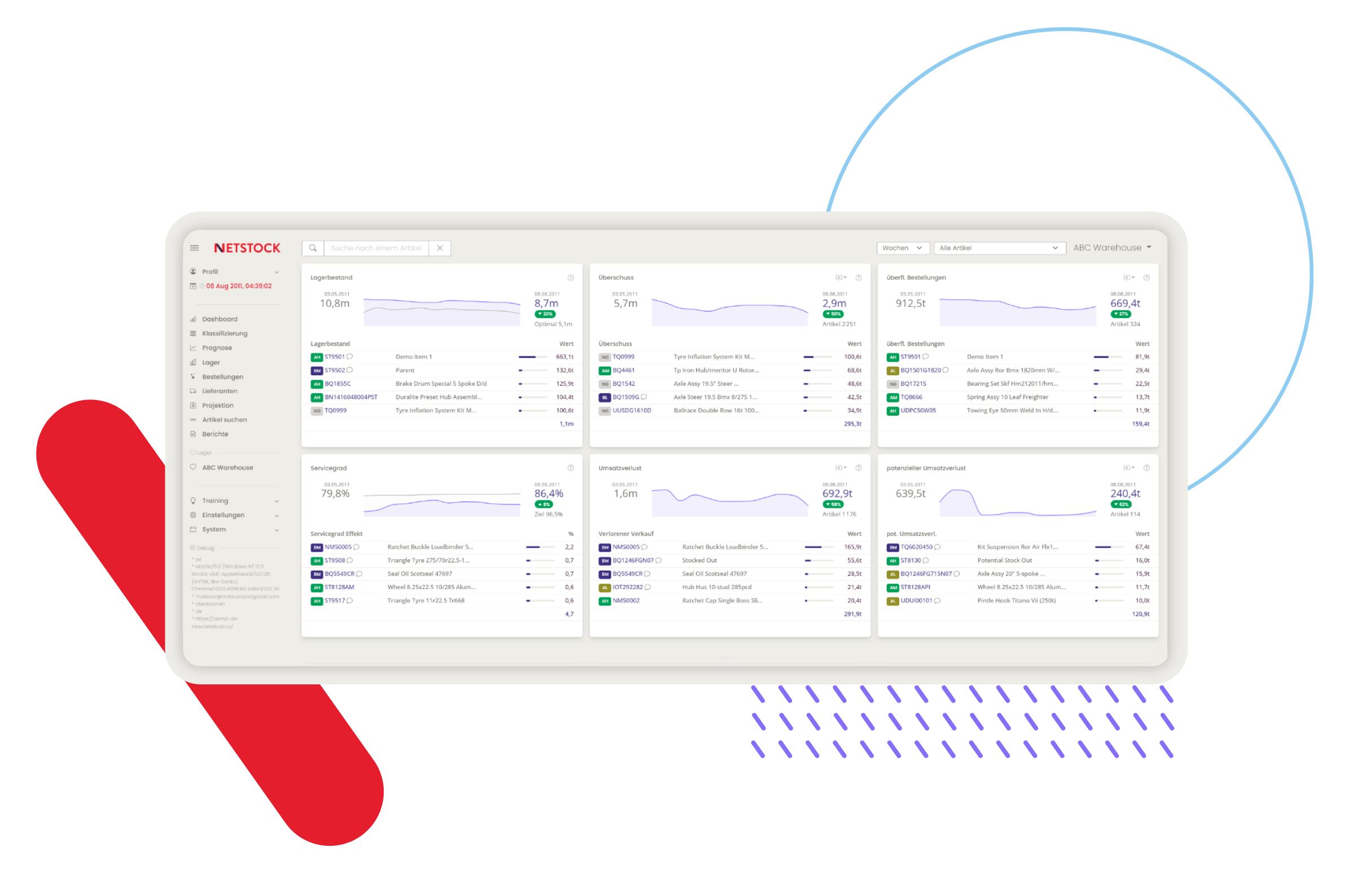
With full visibility and control over their inventory, Netstock customers reduced inventory levels, navigated long lead times, and increased fill rates.
We implemented Netstock and finally had a single-window view of our inventory. The ability to make actionable decisions with the output data has been paramount; we can address multiple suppliers, locations, categories, and more, very quickly. We now have the ability to dial in figures to see the best possible turns with the least amount of excess.
-Ryan’s Pet Supplies
With full visibility and control over their inventory, Netstock customers reduced inventory levels, navigated long lead times, and increased fill rates.
Using Netstock has enabled us to minimize our stock-outs and reduce our excess across certain SKUs. As a result, we now have a more balanced investment in inventory, and I would recommend Netstock to any inventory holding company.
-Tayse Rugs
Next steps to fix the missing link
- Review your current reality, is your ERP system delivering the inventory outputs needed to support your business?
- Calculate the impact of potential lost sales from having too much or too little of the right stock where possible.
- Connect with your colleagues, find out their supply chain challenges and note where the lack of accurate information left sales and marketing campaigns with the incorrect amount of stock available.
- Invest in a demand planning solution that will enable your ERP 4 system to become a power inventory planning tool.
- STOP making these excuses: “Our data is a mess right now – we have to fix that first.” “We have a few other projects going on right now.” “We don’t have the time or budget for a project like this.”
Ready to accelerate your supply chain efficiency?
Contact Netstock and find out how our solutions can help optimize your demand and supply planning.
Get Started
More guides

5 Steps to Managing Your Suppliers like a PRO!
Effective supplier management goes beyond transactions; it’s about collaboration and shared goals.
Read More
Navigating Tariffs: How SMBs Can Stay Prepared, Proactive, and Profitable
Struggling with rising tariffs and supply chain chaos? Discover how SMBs are tackling today’s biggest planning challenges.
Read More
From Chaos to Control: How Predictive Analytics Transforms Inventory Management
Imagine this: You’re a supply chain manager at a mid-sized retail company in December.
Read More

Make Smarter Inventory Decisions with Generative AI
Picture this: A boutique owner stares at her holiday inventory plan, remembering last year’s costly mistakes.
Read More
5 Hidden Causes of Excess Inventory
Learn the key steps to reduce excess inventory and enable smarter inventory decisions for your business.
Read More
AI+Inventory. Built for your business.
Accelerate supply chain planning for building supplies with predictive forecasting software.
Request a demo and see Netstock in action.
Ready to start your inventory AI journey?
Discover more about Netstock’s demand and supply planning software
