
▸ Table of contents:
0%
With today’s disruptions to the supply chain industry, like labor shortages, inflation, shipping delays, and demand peaks, it’s become essential to have full inventory visibility at all times and implementing a supply chain planning software will help you stay on top of your inventory game!
Your business needs to be fully prepared! With the help of accurate data, you’ll make better decisions about your supply chain planning, allowing your business to become agile and responsive – so you can make the right decisions today to ensure you meet future demand.
-Barry Kukkuk, Co-founder & CTO of Netstock
But how do you know which supply chain planning software will give you the best ROI and bang for your buck?
From executing your business strategies to streamlining your processes, implementing supply chain planning software can help you make or break your business goals.
Supply chain planning software capabilities
Before you invest in supply chain planning software, ask yourself…
- Do I have full visibility of my inventory?
- Do I have the tools to help me collate data and instantly flag problematic areas?
- Do I know which suppliers are reliable and deliver on time?
- Is my customer and supplier data secure?
- Do I know which SKUs I have in excess right now?
If you answer no to some or most of these questions, it’s time to invest in supply chain planning software.
The traditional definition of ROI
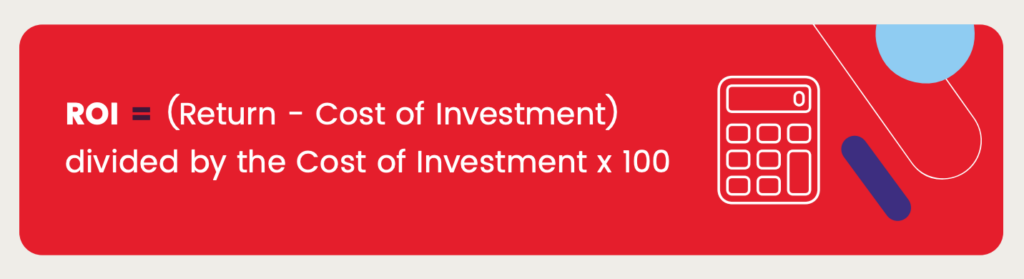
One of the most important calculations for a business is Return on Investment (ROI). Your ROI determines the success of any implementation and whether it has positive results or outcomes for the business.
The new definition of ROI
When calculating the ROI of supply chain planning software, consider the following…
- Will cloud-based software reduce operating, infrastructure, and maintenance costs?
- Is the software immediately available?
- Does the software integrate with other technologies, so it’s easier to use?
- Does the software provider offer ongoing support, so you can continually optimize your planning?
Five key benefits to guide selection
When investing in any software solution, you should determine if the benefits outweigh the costs.
Five key benefits of supply chain planning software include:
- Automated processes to increase productivity and remove the guesswork.
- A dashboard to highlight critical KPIs helps your business reduce labor, production, and operating costs.
- Inventory planning and visibility to make improved supply chain decisions.
- Recommended inventory ordering allows you to unlock operating cash so you can invest in high-performing, profitable products.
- Monitor your supplier performance to balance your investment.
1. Automated processes
Supply chain planning software has become essential for most businesses to keep track of their inventories. If you don’t use effective software to monitor your inventory KPIs, you won’t be able to plan successfully and will end up spending hours completing tasks manually
We’ve written a more in-depth article about why spreadsheets won’t cut in in today’s world.
Read more
Using spreadsheets will always have a place in a business, but with more cost-effective supply
chain planning and automated software available today, it should no longer be your go-to planning solution. As businesses increase in complexity, and further expand their processes,
decision-making becomes much more complex and requires further analysis and modeling.
Like it or not, financial loss, poor decision-making, increased stress and lower productivity levels
across departments have become a reality for many businesses due to spreadsheets and manual tasks. So, why should you choose supply chain planning software over spreadsheets?
The pros & cons of spreadsheets include:
Pros
- Requires little training: Besides complicated formulas, recording data in spreadsheets does not require intensive training.
- Multiple integrations: You can integrate spreadsheets with various software or tools.
Cons
- Lack of security: Depending on your industry, various regulatory and security compliance issues must be considered. Since spreadsheet data is susceptible to fraud and errors, how will this pass as an accurate way to store data?
- No real-time data available: In today’s on-demand economy, people expect to see real-time data in a single click. Usually, data has to be extracted from multiple systems, which needs to be done simultaneously so that the data is consistent and usable. Up-to-date, real-time information is not an option spreadsheets, and you will always be one step behind.
- Manual item classification & categorization: Preparing an ABC item classification using spreadsheet formulas may be easy. You will probably need to do it through an external planning worksheet and link back the result as a VLOOKUP. Although it creates a linked spreadsheet, the link can easily be broken or lost. As soon as you introduce a second classification set, ie., the HML (high, medium, low) criterion, it becomes clearly evident that a spreadsheet is not the ideal choice as you now have more spreadsheets and worksheets to maintain.
- Manual data analysis: You will need to analyze your supplier history data as it’s directly related to your demand forecasting. This requires you to look at your order information against your goods received information. This becomes a manual process for each supplier and each data entry.
- Not user-friendly or collaborative: When you need to handle a lot of data, you’ll find yourself scrolling through endless amounts of data rows, entries, and worksheets, making it difficult to interpret the actual data.
- Time consuming, manual process
Now, consider the pros & cons of supply chain planning software:
Pros
- Enhanced forecasts: Supply chain planning software enables collaboration and is securely designed to collect input from your suppliers and customers.
- Protected data and security compliance: Most supply chain software solutions are encrypted and must adhere to specific security protocols and data compliance like GDPR and ISO 27001.
- Meeting customer demand and improved customer service: Supply chain planning software is built on “service-level capability features” designed to suit your needs.
- Conduct more accurate item classification: Classifying items makes it easier to identify stock and safety stock criteria further down the line. Invest in high-performing, profitable products to provide superior customer service.
- Analyze sales and previous forecast history: The software takes your sales history and maps it to your previous forecasts to check your level of accuracy and predictability.
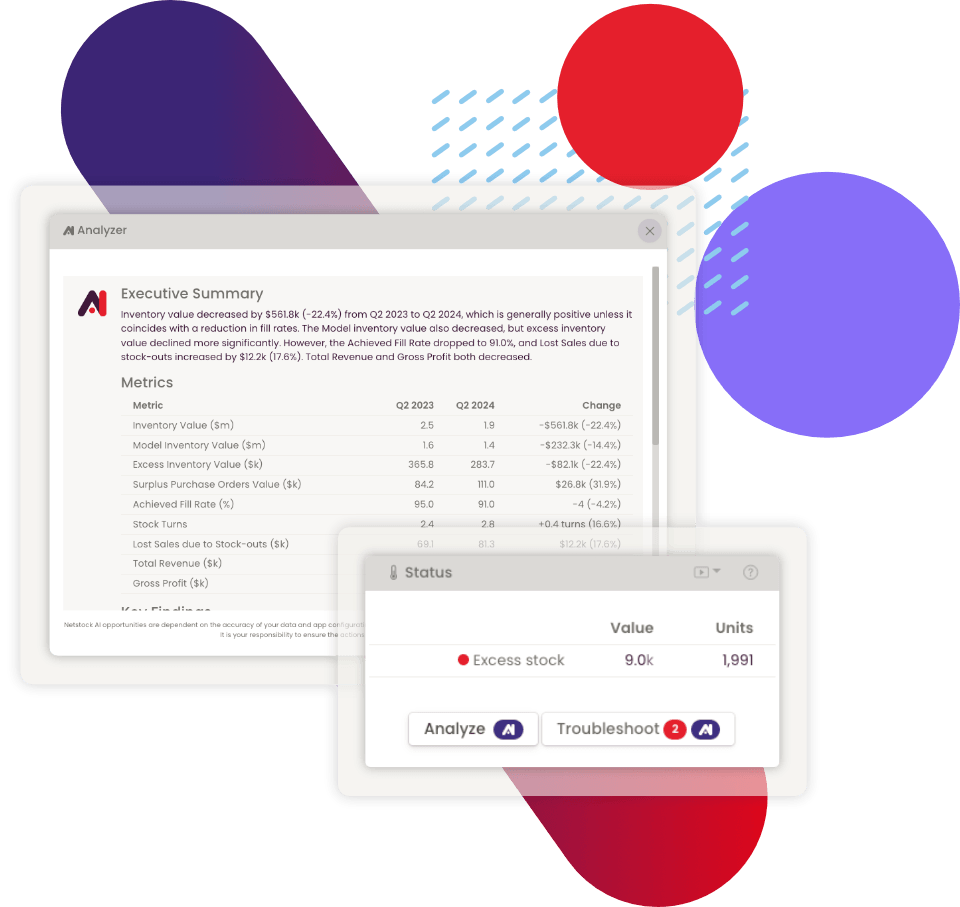
- Full inventory visibility to manage, monitor, track and report by exception.
- Reduce supplier disruption to do away with unnecessary suppliers and improve safety stock levels.
- Improved collaboration: to align marketing, finance, sales, and production teams.
- Easy and efficient ERP integrations: Turn your ERP data into inventory intelligence.
Cons
- Change management: Customers and team members will have to adjust to new tools, processes, people, and technology.
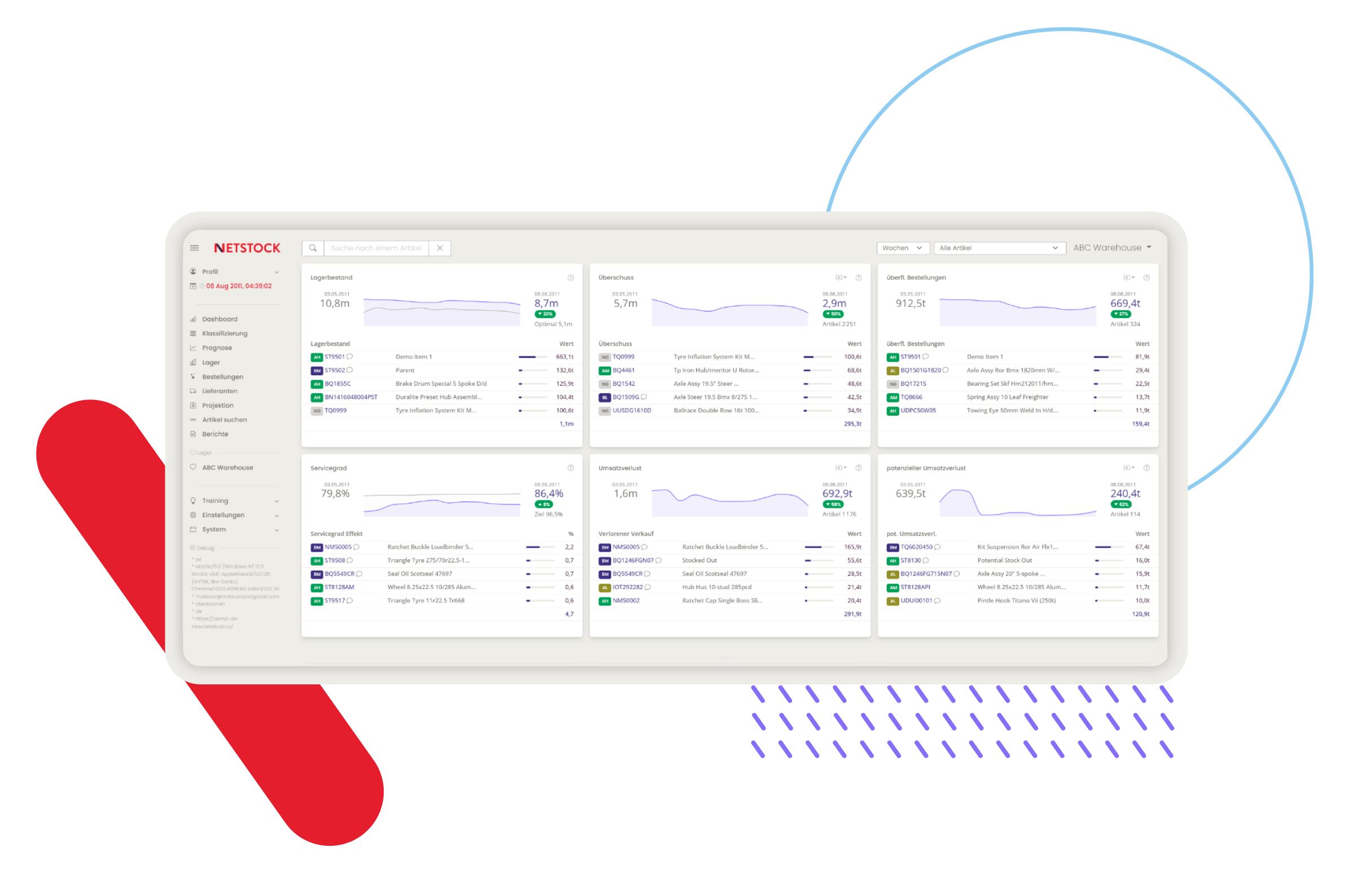
With Netstock, you can quickly meet demand with the right inventory. Visibility of your KPIs will help you monitor and make faster supply chain planning decisions so you can efficiently allocate resources to high-performing and profitable products.
Use our Inventory Planning & Optimization capability to:
- Maximize your inventory value investment
- Capture lost sales and revenue
- Reinvest your capital savings to unlock your growth potential.
Learn more about Netstock's inventory automation solutions
2. A dashboard to highlight critical KPIs
Inventory visibility shows all internal inventory records, and it’s crucial for your supply chain so you can better stock, monitor and order relevant items at the necessary time before potential stock-outs occur.
With Netstock’s machine-learning enhanced forecasting & demand planning capabilities, your business can generate improved forecasts factoring in seasonality, trends, promotions, and events. Now, you can allow automated planning to capture your full sales potential.
Forecasting & demand planning in Netstock allows your business to…
- Eliminate guesswork.
- Simplify forecasting models.
- Easily run forecasting models for best and worst-case scenarios.
- Anticipate market demand and supply risk.
- Integrate inventory ordering with ERP data.
Learn more about Netstock's demand forecasting solutions
3. Inventory planning and visibility
Inventory encompasses parts and/or raw materials a business uses or sells. For growing businesses, efficiently utilizing inventory is necessary for controlling costs, protecting profit margins and meeting demand on time.
This starts with classifying your inventory so you can make improved supply chain planning
decisions for your business. Classifying items according to each item’s value and velocity to
help planners automatically focus on the right items needed to meet demand. By classifying your stocked items, you will quickly know if key items are potentially going to stock out or if you have too much of slower selling items.
Understand your fill rate targets and track towards them. If you keep getting closer to your target fill rate, you know you are going in the right direction. Keep tracking it. Know what you want to measure, your target, and how it changes over time.
Ensure you examine your upstream supply and downstream demand. Frequently review your orders and see if they align with your demand and whether your ordering cycle correlates with the current reality of receiving stock from your suppliers.
With Netstock, you can balance your inventory investment and allocate resources to high-performing, profitable products. In addition, you’ll be able to see all your critical KPIs on one single dashboard and rapidly respond to changes in demand and supply.
Learn more about Netstock's inventory optimization solutions
4. Recommended inventory ordering
How well does your business meet customer demand?
Unlocking operating cash in your business can impact your inventory value, investment, cash flow, and business valuation. Reduce your upfront expenses and avoid excess costs by implementing relevant software from the start.
Inventory ordering allows you to generate and optimize purchase orders, work orders for production and distribution plans in just a few clicks. Quickly and efficiently meet your inventory goals to action important purchase orders first.
With Netstock, you can…
- Anticipate supply risks and avoid disruptions.
- Optimize your shipping costs.
- Manage by exception.
Learn more about Netstock's inventory ordering solutions
5. Monitor your supplier performance
Develop a healthy ongoing relationship with your suppliers! Being able to measure how well your suppliers are performing will ensure you can consistently meet customer demand.
Your suppliers should be measured and monitored according to the following factors…
- Quality of delivery
- Total costs
- Overall delivery based on fill rate, lead time, on-time delivery, etc.
- Their flexibility, are they agile to changes in customer demand?
- Do they comply with regulatory requirements and standards like ISO 27001?
Monitoring supplier performance is essential to reduce overall costs, increase process efficiencies, and improve business performance.
Reviewing your supplier data shows you where to focus your attention – and what inventory processes need adjusting or which items you may need to source secondary suppliers for.
Does your supplier data help drive customer experience and loyalty?
With Netstock, you can measure and monitor supplier performance to actively respond to customer demand and improve fill rates. In adition, you’ll be bale to automatically adjust your safety stock levels in line with supplier reliability to improve your supplier network.
Learn more about Netstock's supplier performance solutions
KPIs for selecting a planning vendor
When buying any software solution, you should determine if the benefits outweigh the costs. This is done by calculating your ROI and keeping the above factors in mind.
Remember your business has KPIs for production, processes, cash flow, and profitability. The business goals and objectives will influence your inventory policies.
Inventory Policy Modeling can help align your inventory policy with your overall business goals and objectives.
Optimize inventory by measuring a product’s risk profile to ensure you balance inventory levels and hold the optimal amount of inventory.
Classify products and increase your inventory visibility.
Set the right safety stock levels.
Implementing Netstock removed the guesswork and saved us from tedious amounts of time to work out our orders each month.
-Martin Reeves, Operations Manager, Keir Surgical
The inventory KPIs are then used to monitor the inventory policies, track inventory turnover and ultimately measure how well your inventory performs based on your sales. When you look at your inventory, you need to know the value of your inventory holding relative to how much excess stock you have.
Consider these 7 KPIs to make informed decisions for your business:
1. Stock holding. The ideal amount of inventory a company needs to reduce the risks of excess stock or stock-outs.
Tip: Specify your replenishment cycle (RC) and ensure it’s set up correctly. Changing your RC will result in your KPI drastically changing.
2. Model stock. The maintenance of adequate levels of inventory so there is an adequate supply of an item available.
Tip: Implement supply chain planning software to automatically adjust your safety stock and accommodate supply chain risks.
3. Actual vs target fill rate. The percentage of stock demand met by immediate stock availability.
Tip: Rank your items from the highest to lowest fill rate and target the most problematic areas first to give you a higher chance of making more sales.
4. Potential stock-outs. Identify potential stock-outs to action proactively before they result in stock-outs and lost sales.
Tip: Prioritize your business-critical stock items to forecast potential upcoming stock-outs and act proactively.
5. Stock-outs and excess stock. Stock-outs are items unavailable for purchase at retail and are generally, fast-moving consumer goods. Excess stock is when inventory levels exceed what is required.
Tip: Avoid stock-outs and excess stock with Netstock’s predictive forecasting and planning tools.
6. Lead times. The amount of time it takes for an order to be fulfilled.
Tip: Stay in touch with your suppliers to ensure expectations are met and addressed to achieve an accurate lead time.
7. Surplus orders. The quantity supplied is greater than the quantity demanded. You should identify surplus orders to action before they arrive.
Tip: Take your highest-performing and most profitable orders, and action them first. Decide to cancel, delay or reduce the quantity of your order.
Netstock has been unquestionably the best software implementation we’ve experienced. The process was well managed, and the results have been fantastic. We’ve saved over two days a month in labor, and can now actively manage our stock levels against known targets. From a financial perspective, we have so far seen a 25% reduction in stockholding
-Tim Edmondson, Managing Director, Edgar Edmonson
The Netstock ROI calculator
The ability to forecast is vital and enables you to make informed decisions and develop data-driven strategies. It shows you know your business, where you are heading, and your goals and objectives.
Planning and forecasting accurately means being more prepared and having the right information to understand how much capital to invest in people, technology, and processes.
How Netstock can improve your supply chain planning…
- Forecast up to 12-24 months.
- Measure supplier performance and improve supplier lead times
- Increase visibility into reorder points, lead times, and order constraints.
- Automation saves you time, money, and effort while increasing your team’s productivity levels.
- Predict and determine your demand more accurately.
- Reduce inventory holding by freeing up cash tied up in excess inventory and cutting carrying costs.
- Reduce unnecessary inventory costs.
- Improve your fill rate, reduce stock-outs, increase sales, and customer retention.
- Make more sales and generate accurate forecasts.
- Have visibility of your inventory KPIs at all times.
From increased revenue to unlocking cash, use our ROI Calculator to learn what your estimated ROI will be when you implement Netstock in your business.
Calculate your ROI now
Conclusion
If you want to invest in supply chain planning software, you must ensure the benefits are more significant than the overall costs involved. No matter how you look at it, your business needs to invest in supply chain planning software to help you accurately forecast demand, deliver orders on time and cut unnecessary costs. Ensure your business remains agile, responsive, and profitable, and focus your time on the things that matter most in your business.
Ready to accelerate your supply chain efficiency?
To help with your software selection, find out how Netstock plugs into your ERP data & helps your inventory come to life!
Get Started
More guides
5 Steps to Managing Your Suppliers like a PRO!
Effective supplier management goes beyond transactions; it’s about collaboration and shared goals.
Read More
Navigating Tariffs: How SMBs Can Stay Prepared, Proactive, and Profitable
Struggling with rising tariffs and supply chain chaos? Discover how SMBs are tackling today’s biggest planning challenges.
Read More
From Chaos to Control: How Predictive Analytics Transforms Inventory Management
Imagine this: You’re a supply chain manager at a mid-sized retail company in December.
Read More

Make Smarter Inventory Decisions with Generative AI
Picture this: A boutique owner stares at her holiday inventory plan, remembering last year’s costly mistakes.
Read More
5 Hidden Causes of Excess Inventory
Learn the key steps to reduce excess inventory and enable smarter inventory decisions for your business.
Read More
AI+Inventory. Built for your business.
Accelerate supply chain planning for building supplies with predictive forecasting software.
Request a demo and see Netstock in action.
Ready to start your inventory AI journey?
Discover more about Netstock’s demand and supply planning software
