Imagine a mid-sized distributor with $3.2 million in inventory. On paper, those are healthy stock levels. In reality, $800,000 is tied up in slow-moving products that won’t sell for months (or possibly ever). Meanwhile, the finance team is scrambling to secure a credit line to pay for an unexpected supplier invoice as the slow-moving stock has locked up the cash.
This scenario plays out daily across SMBs worldwide. The increased supply chain variability in 2025 only intensified the problem.
Inventory reduction is a vital component of inventory management best practices and entails trimming down excess stock to strike a delicate balance between supply and demand. Inventory reduction strategies help keep inventory holding costs in check, bolster cash flow, and mitigate risks associated with excess stock.
Yet, inventory planning strategies in 2026 require more nuance than cutting stock levels. Tariff uncertainty, supplier volatility, and demand shifts necessitate that businesses strike a balance between working capital efficiency and strategic preparedness. SMBs have a new objective: maintaining the right inventory, not just less inventory.
What you’ll learn:
- How 2025 reshaped planning responsibilities and exposed vulnerabilities in traditional inventory management.
- The tension between reducing excess stock and maintaining strategic safety stock in volatile markets.
- Why tariff uncertainty demands more sophisticated inventory planning, not just bulk ordering (or bulk cutting).
- Actionable inventory planning strategies that free up cash without sacrificing service levels.
- How AI transforms reactive inventory management into proactive resource allocation.
- A practical framework for assessing your inventory health and improving processes, just in time for the new year.
Setting the scene: Lessons from 2025 SMBs can learn from
The supply chain disruptions of 2025 forced SMBs to confront uncomfortable realities about their inventory management practices. According to the 2025 Benchmark Report, 63% of businesses felt direct impacts from tariff changes. For 68%, lead time variability as their top supplier challenge. These inconveniences exposed fundamental weaknesses in how businesses plan, purchase, and manage stock.
These stats showcase that reactive inventory management fails under pressure. Businesses that relied on static forecasts and manual processes found themselves simultaneously facing stock-outs on critical items and excess inventory on products they couldn’t move. A lack of visibility, predictive capability, and agile planning tools instigated the problem. Without these, businesses couldn’t adapt as conditions changed in real time.
The basics:
Truly understanding the importance and challenges of inventory reduction requires clarity on a few foundational concepts.
What is inventory reduction?
Inventory reduction is the process of reducing your inventory levels to meet reduced demand. If you cannot accurately measure and manage your inventory in line with supply and demand, you risk sitting with excess inventory that you don’t need and can’t sell, collecting dust in your warehouse.
Why is excess inventory a problem?
Excess inventory refers to a business’s additional inventory that typically exceeds the current or anticipated demand for those products. That excess inventory can result from factors such as overestimating demand, changes in market conditions, or the lack of visibility and ineffective inventory management processes.
The main issue with excess inventory is that it costs businesses a lot of money! The capital tied up in excess stock is not readily available for other critical business needs. This reduces financial flexibility and potentially impacts business growth and opportunities.
Other reasons why excess inventory is a problem for your business:
- Pay for storage costs: Storing excess inventory incurs additional costs, including warehouse space, insurance, security, and utilities, which can erode profits.
- The risk of obsolescence: Excess inventory increases the risk of items becoming obsolete, especially in industries with rapidly changing technology or trends, resulting in potential losses.
- Reduced cash flow: Excessive inventory can tie up cash flow, making it challenging to meet immediate financial obligations, such as paying suppliers, other overheads, or salaries.
- Decreased profit margins: Clearance sales or markdowns may be required to move excess inventory, thereby reducing profit margins.
- Inefficient operations: Managing excess inventory can lead to inefficiencies in procurement, storage, and handling, resulting in increased operational costs.
- Inventory damage: Over time, excess inventory may deteriorate or become damaged, resulting in decreased product quality and potential waste.
- Missed opportunities: By focusing on selling excess inventory, a company may miss opportunities to introduce new, more profitable products.
How do tariffs make inventory reduction strategies more complicated?
Tariff uncertainty creates a paradox for inventory planners. Traditional wisdom says reduce excess stock to free up cash. But when tariffs threaten to increase product costs overnight, many businesses face pressure to buy now before prices rise – even if that means carrying more inventory than demand justifies.
The 2025 Benchmark Report revealed that 44% of SMBs facing tariff disruptions chose to shoulder costs instead of passing them to consumers. This decision sometimes meant ordering larger quantities, deliberately increasing inventory levels as a hedge against future cost increases. This strategy protects margins in theory, but it assumes stable future demand. Additionally, businesses need to hope that the cash tied up in safety stock won’t be missed elsewhere.
This is where the concept of “strategic safety stock” emerges. Strategic safety stock represents intentional over-ordering based on specific risk factors (e.g., tariff increases, supplier instability, anticipated demand spikes) rather than poor planning or inaccurate forecasts. The challenge planners face is determining how much strategic safety stock truly protects the business versus how much disguises excess inventory under a different name.
For effective inventory planning in 2026, planners must know the difference between the following scenarios:
- Excess inventory from poor forecasting or over-ordering: Reduce immediately to free up capital.
- Strategic safety stock addressing known risks: Maintain, but monitor closely and convert to working capital once the risk passes.
- Speculative inventory based on uncertain tariff timelines: Approach cautiously. The financial risk of tying up capital may exceed the potential savings.
In transitional markets, inventory reduction strategies must account for uncontrollable volatility without abandoning disciplined planning altogether. Businesses require sophisticated tools that enable them to model various scenarios, quantify trade-offs, and adjust levels as conditions change.
Want to reduce excess inventory?
Download the 5 Hidden Causes of Excess Inventory eBook now!
Better inventory planning frees up working capital
Working capital enables operational flexibility. When extra inventory eats up cash, businesses can’t invest in growth, respond to opportunities, or weather unexpected challenges.
Effective inventory planning strategies simultaneously balance multiple priorities, including maintaining service levels, minimizing stock-outs, optimizing cash flow, and reducing carrying costs. To achieve this, businesses must move beyond reactive ordering based on gut instinct or static rules, toward dynamic planning that adapts to real-time conditions.
Application: Cost reduction strategies in inventory management
Improve inventory visibility
This is the most important aspect of inventory management. The more visibility you have on what’s happening with all stock items, the bigger the opportunity you have to rectify stock levels before they become a real problem.
Effective visibility means tracking key performance indicators (KPIs) such as inventory fill rate, stock holding, days on hand, and turnover rates in real time. You also need visibility of the top SKUs that need urgent attention. Become aware of those running into excess or potentially stocking out. With this level of inventory visibility, you become proactive instead of reacting only when things are already in excess. At that stage, your cash is already tied up in inventory that isn’t generating returns.
Modern inventory planning requires dashboards that surface actionable insights immediately: which items are trending toward excess, which suppliers are underperforming, which SKUs are at risk of stock-out, and where working capital is concentrated. This visibility transforms inventory management from a periodic review process into a continuous optimization engine for your business.
“With the Netstock dashboard, I can quickly see stockouts and potential stockouts, which allows me to have a focused conversation with my sales team to determine what’s coming up and what else I need to consider when placing orders” – COO, Best Vinyl.
Classify your inventory
Not all stock items are made equally, which means not every SKU in your inventory contributes the same to the bottom line. That’s why classifying each item and knowing the buying strategy is crucial.
Sort into three categories:
- Stocked items: Ready for customers to buy
- Non-stocked items: To be replenished if there is a firm demand
- Obsolete items: Won’t be replenished for the foreseeable future
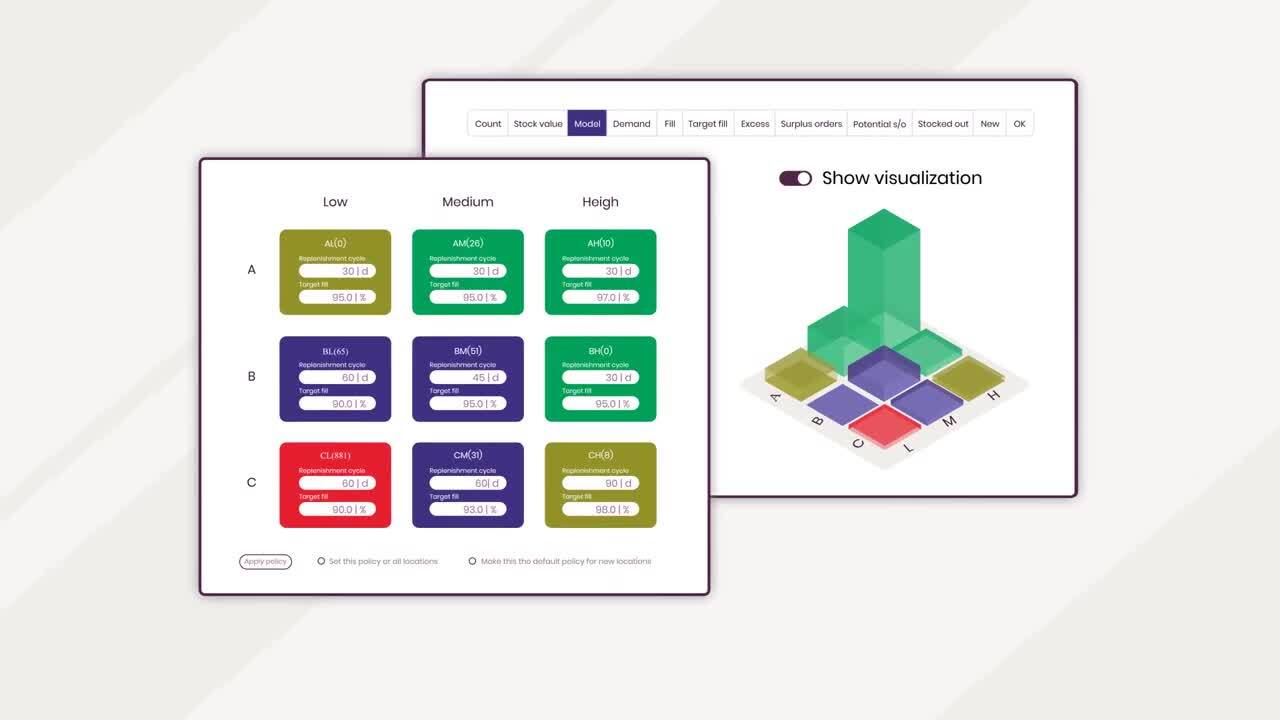
Once you have this information, you can classify your stocked items according to the Pareto Principle. This principle suggests one must focus on 20% of the stock that yields 80% of your sales. Classifying your inventory means categorizing your items into ABC, from the fastest to the slowest, and then by velocity, which focuses on high, medium, and low.
Imagine running an automotive parts store with two items in your inventory: car engines and nuts and bolts. These categories have the same annual turnover, meaning they sell the same units yearly. However, they are vastly different and demand unique inventory management strategies.
| Item | Sales Classification | Velocity Classification | Approach |
| Car engine | High-value Car engines are expensive and represent a significant portion of your inventory’s value. Each unit is costly, and you can’t afford to invest a lot of capital by stocking many of them. |
Low These items sell slowly; customers don’t buy car engines every day. |
Carefully forecast demand and maintain enough stock to meet anticipated sales. Closely monitor market trends and supplier lead times to prevent unnecessary overstocking and capital tied up. |
| Nuts and bolts | Low-value
Relatively inexpensive. While they may have the same annual turnover as car engines, each unit costs significantly less. |
High These items move quickly. Customers buy nuts and bolts frequently. |
Make sure you always have an ample supply on hand. Running out could lead to customer dissatisfaction and lost sales. Maintain higher safety stock levels and reorder points for these items to ensure prompt meeting of demand. |
Watch how Netstock automatically classifies your inventory.
Improve forecasting
Improving and fine-tuning forecasting activities enables businesses to streamline inventory management, reduce carrying costs, and optimize capital utilization, ultimately reducing overall inventory levels.
Here are key forecasting activities to consider:
- Data analysis and historical sales data: Analyze historical sales data and market trends to identify seasonal fluctuations.
- Team collaboration: Involve sales, marketing, and other relevant teams in the forecasting process. Their insights and market knowledge can help refine predictions.
- Advanced forecasting models: Implement advanced forecasting models, such as time series analysis, moving averages, or machine learning algorithms, to improve prediction accuracy.
- Forecasting new products: Items without sales history need a manual forecast for the initial few months. Ensure the new item isn’t replacing a product with a cheaper or higher-quality alternative. If it is a replacement, link the new item to the old one, utilizing the old item’s sales history for forecasting.
- Optimize safety stock: Fine-tune safety stock levels based on more accurate forecasts.
- Continuous monitoring and adjustment: Regularly monitor forecast accuracy and make necessary adjustments based on actual sales data and changing market conditions.
- Develop various scenario plans: Incorporate scenario planning into your forecasting process by considering multiple future scenarios, such as market disruptions, changes in customer behavior, or supply chain interruptions. Assess how different scenarios might impact demand and adjust forecasts accordingly.
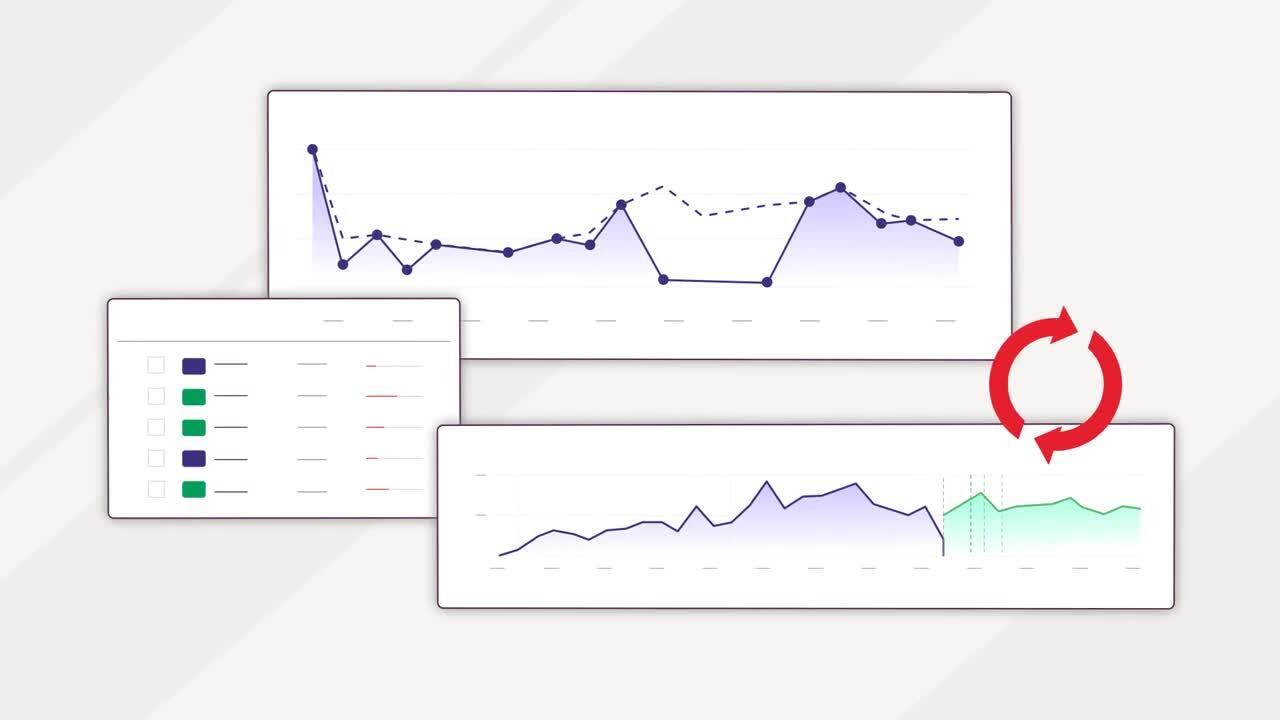
Watch how Netstock creates an accurate forecast for each item in each location.
Reduce replenishment cycles
The replenishment cycle is the plan that determines how often you should restock an item to meet future demand. When you order an item, you want it to last for a certain number of days until the next order arrives. This means you should aim to have enough stock to cover that specific time frame between orders.
When you can reduce the replenishment cycle, you can:
- Reduce safety stock: A shorter replenishment cycle enables you to maintain smaller safety stock levels, as you can replenish inventory more frequently.
- Improve responsiveness: You can respond more quickly to changes in customer demand. This agility enables you to adjust orders based on real-time information, reducing the risk of overstocking due to inaccurate forecasts.
- Reduce holding costs: Smaller order quantities and lower safety stock levels associated with a shorter replenishment cycle translate to lower carrying costs.
- Improve inventory turnover: A shorter replenishment cycle often leads to higher inventory turnover rates. Products spend less time in storage and are sold more quickly, reducing the risk of obsolescence and freeing up capital for other investments.
- Optimize capital allocation: Less capital is tied up in inventory when the replenishment cycle is reduced. This improved capital efficiency allows businesses to allocate funds to other strategic initiatives.
- Enhance supplier collaboration: Shortening the replenishment cycle may require closer collaboration, leading to more efficient and reliable supply chains. Timely communication and coordination can lead to faster lead times and order fulfillment.
Reduce supplier lead time
Supplier lead time is the time it takes for a supplier to fulfill an order from the moment the order is placed until the products are delivered and ready for use or sale by the customer.
“Supplier lead times were always a guess and based on a supplier’s full line as opposed to individual items. It took tedious amounts of time to work out our orders each month, and I would need to go back and check every row to make sure that the calculated number made sense based on the three or 6-months sales trend” – Operations Manager of Keir Surgical.
Measuring your suppliers’ performance is critical to inventory planning and supporting inventory reduction. With accurate supplier data, you’ll know which suppliers deliver on time and in full. With this level of visibility, you can negotiate reduced lead times with key suppliers. Regularly communicating with suppliers lets you know if they’re experiencing any challenges in delivering stock, giving you enough time to source alternative stock from another supplier.
By reducing lead times, you’ll:
- Lower safety stock: Shorter lead times mean you can maintain smaller safety stock levels, reducing the need for excess inventory.
- Faster response to demand: You can quickly adjust planning to changing customer demand, minimizing the risk of overstocking.
- Improve cash flow: Shorter lead times free up working capital that can be used for other business needs, improving cash flow.
Review supplier MOQs
The supplier sets the Minimum Order Quantity (MOQ), which is the smallest quantity that a supplier will sell in a single order. Customers must meet or exceed the MOQ in their orders when buying from suppliers.
By reviewing supplier MOQs, you can contribute towards inventory reduction by doing the following:
- Balance costs: MOQs help balance ordering in larger quantities to benefit from economies of scale (lower unit costs) and the need to manage carrying costs associated with holding excess inventory.
- Improve inventory planning: MOQs impact carrying, order, and holding costs. They help determine how much stock to order to meet demand while adhering to supplier requirements.
- Visibility of costs: MOQs impact carrying costs, order costs, and holding costs. Ordering below the MOQ may result in higher unit costs, while ordering above it may lead to excess inventory and associated holding costs.
- Improve efficiency: MOQs can influence supply chain efficiency by affecting order frequency and lead times. Large MOQs may lead to infrequent orders but longer lead times, while smaller MOQs may necessitate more frequent orders with shorter lead times.
- Better cash flow: MOQs affect the allocation of working capital. Ordering large quantities to meet MOQs ties up more cash, while smaller orders may free up capital for other uses.
- Mitigate risk: MOQs can be adjusted to mitigate risk. Smaller MOQs provide flexibility to reduce exposure to market uncertainties or fluctuations in demand.
- Better supplier agreements: MOQ negotiations and agreements with suppliers are essential for maintaining strong relationships and ensuring smooth supply chain operations.
- Improve demand forecasting: MOQs impact demand forecasting by influencing order quantities. Accurate demand forecasts are essential to avoid overstocking or stockouts.
“Implementing Netstock, along with other process changes, allowed us to complete our annual order cycle with our suppliers ahead of their annual production capacity peak periods.” – Global Head of Operations, Zhik
Leveraging technology for inventory reduction, strategic planning, and resource allocation
Managing your inventory with an inventory planning solution provides teams with the visibility, predictive analytics, and dynamic optimization capabilities necessary to execute these strategies effectively. There will always be variations in supply and demand, and having the technology to adjust inventory levels in line with these changes automatically transforms reactive management into proactive resource allocation.
Manual inventory management through spreadsheets can’t keep pace with modern supply chain complexity. When tariffs change overnight, suppliers miss delivery times, or customer demand shifts unexpectedly, businesses need systems that recalculate safety stock requirements, adjust reorder points, and flag at-risk SKUs in real time.
Technology delivers several critical capabilities that manual processes cannot:
- Real-time visibility across the entire inventory portfolio
- Predictive forecasting with machine learning
- Automated replenishment optimization
- Scenario modeling for strategic planning
- Cross-functional collaboration tools
Integrating with your existing ERP, a planning solution like Netstock leverages the data in your system to provide the visibility you need to support inventory reduction, while also adding advanced forecasting, optimization, and scenario planning capabilities that ERPs typically lack.
The 2025 Benchmark Report showed that AI adoption in inventory management more than doubled from 23% in 2024 to 48% in 2025, with forecasting (63%) and inventory optimization (58%) leading as the top use cases. This rapid adoption reflects a decisive industry shift: businesses recognize that manual methods cannot deliver the agility and precision required to
Next step: Get a read on your inventory health for 2026
Before implementing new strategies, understanding your current inventory health gives you a baseline for measuring improvement. Taking stock of where excess is hiding, which SKUs tie up the most cash, and where forecasting accuracy errors lie reveals the biggest opportunities for freeing up working capital.