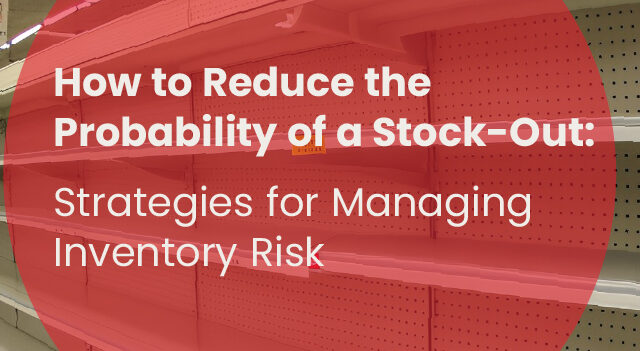
Stock-outs are serious supply disruptions that can hurt customer relationships, negatively impact revenue, and even weaken your business’s competitive positioning. The good news is that stock-out risk probability can be easily determined with a standard formula, and using data-driven solutions can further decrease the chance of this happening again.
Lead time for industrial equipment goes far beyond shipping. It includes the entire product journey, from order placement until the product reaches the customer.
Calculating ending inventory is a critical task. You’ll use it to determine your cost of goods sold (COGS), assess the business’s financial health, and plan production and purchasing.
Small and medium-sized businesses (SMBs) are navigating daily challenges: from geopolitical disruptions and truck driver shortages to rail strikes, port delays, and extreme weather.
Every business strives for operational efficiency and customer satisfaction. Effective inventory planning is at the core, as it ensures balanced stock management.
Inventory plays a central role in the business world. It’s an asset that supports production and sales and is a crucial aspect of effective inventory management.
Days Sales of Inventory (DSI), or Inventory days, is a key financial metric that measures the average number of days a company takes to sell its entire inventory during a specific period.
The picture of a typical modern supply chain operation is one of unrestricted movement of goods across different facets and levels of the supply chain.