For many small and mid-sized businesses (SMBs), peak season represents one of the most important revenue periods of the year. It’s also when inventory decisions often carry the highest stakes. The difference in 2026 is that planning teams are entering peak season after a year defined by tariff pressure, supplier changes, rising freight costs, and longer lead times.
Last year, we saw nearly 50% of SMBs enter tariff turbulence having never initiated a proactive tariff mitigation strategy. Many still navigated the disruption successfully by stockpiling ahead of the first wave of tariffs and absorbing higher costs to keep customers stocked. This year, that same playbook is much harder to repeat.
According to our survey of SMBs this April, 80% are now passing tariff-driven costs through to customers, and 73% say tariff uncertainty has pushed them to extend their planning horizon. That means last year’s demand signals alone are no longer enough. Customer behavior, supplier reliability, and freight conditions all need to be considered together before orders begin consuming containers, capital, and shelf space.
The four strategies below reflect where planning teams need to approach this peak season differently. Together, they’ll help SMBs move beyond simply planning earlier and toward planning more effectively.
Key takeaways
- Historical demand data alone won’t cut it in 2026. Pressure-test forecasts against current buyer behavior and macro conditions.
- Supplier risk deserves equal weight to demand risk in peak planning, and it’s harder to track manually.
- Container decisions are financial decisions. Fill orders around what’s moving, not last year’s defaults.
- The inventory you carry into Q1 is decided now. Build the post-peak plan before peak starts.
Rebuild the demand forecast from current conditions
Demand forecasting tends to lean on historical signals. The same quarter last year, the same SKU mix the year before, the same Q4 cadence that has been stable for a decade.
That lean becomes a liability when the underlying environment shifts as much as it has over the past year.
Consider this hypothetical: A mid-sized distributor is starting to plan for peak 2026. Last year, their bestselling categories were anchored by customers who absorbed price increases without trading down.The challenge: those same customers have now seen 12 months of pass-through pricing, household budgets have tightened on other essentials like fuel and groceries, and the bestselling SKU from last November may not be this November’s. Reliance on that internal baseline isn’t inaccurate so much as it is incomplete for the conditions it’s being applied to.
This year, build the demand picture from category trends, analog SKUs, pre-season sell-through signals, and macro shifts that touch the customer’s wallet. Treat the first forecast as a starting point, not a fixed plan. Recalibrate continuously as order volume picks up.
This is how the most successful SMBs can stay ahead of what’s next by looking at what’s happening right now.
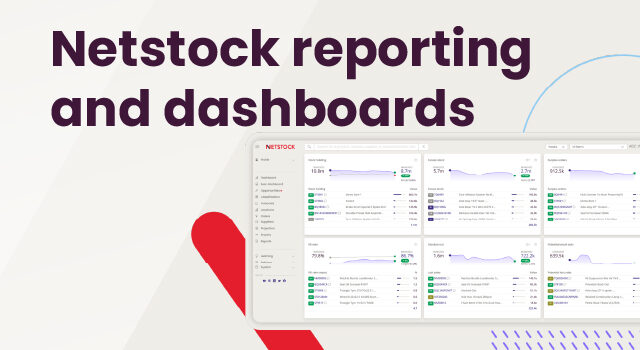
Netstock’s AI Opportunities surfaces demand shifts like this buried in customer data, giving planning teams a head start on the recalibration cycle, without the need to rework a complex spreadsheet.
Give supplier risk equal footing to demand
For SMBs working in spreadsheets, supplier risk is one of the harder variables to keep up with through peak. It depends on external data that often lives outside manual planning workbooks, and it changes faster than most lean teams can track
Teams that moved early to secure new supply lanes can now plan with greater confidence. Those still working through the transition may find themselves competing for limited capacity later in the cycle, facing less favorable terms and longer lead times.
“(Netstock’s) AI recommendations help prioritize key products, especially for fast-selling categories like outdoor rugs during the summer season. Netstock is critical in making sure we order at the right time.” — Laurette Elling, Buyer, Volero
The data behind a supplier bet is what separates strategic and proactive from panicked and reactive. SKUs that consistently sell out annually, anchored by suppliers whose lead times are creeping up, are candidates for ordering earlier and bigger. What makes spreadsheets struggle here?
- Supplier performance,
- lead-time drift,
- SKU Velocity.
They often live in separate, static files, but Netstock factors them in behind the user’s interface, resulting in lower mental load required as supplier conditions change during peak.
Order smart, especially with freight in motion
The big bet last year was a strategic overstock ahead of the first tariff wave, according to Netstock’s 2025 Benchmark Report. For many SMBs, that bet paid off in customer service and in working capital that recycled into the next quarter.
The complication this year is that an overstock takes up space, ties up capital, and forces choices about what gets ordered now versus what waits. Freight adds another wrinkle, as changes in shipping costs lag behind oil by roughly 60 days.
Four questions worth running through before placing peak orders:
- What are the fastest-moving SKUs over the past 6 months, and are they actually the ones taking up the most container space?
- Which SKUs sold through quickly enough at last year’s peak that they’re the safest candidates for an early order?
- How much of the next container is reserved for early-peak stockup, and how much capacity is left to fill with reliable sell-through SKUs?
- Where in the order does it make sense to split the volume across two shipments to avoid locking into a single freight assumption?
Netstock’s Container Builder module is designed to help SMB planning teams answer questions like these without manually rebuilding container math each time. It turns Netstock’s automated inventory recommendations into container-optimized orders, so when an early-peak stockup only fills a container partway, the remaining space can be quickly filled with SKUs the data predicts will move quickly.
Plan beyond the peak season window
Peak season is a major opportunity. The complication is that the inventory decisions made for peak season quietly set the conditions for Q1.
A look back at the performance of peak season 2025:
- 2025 Holiday sales grew 4.1% year over year and crossed $1 trillion for the first time, landing near the top of NRF’s forecast range.
- Net percentage of small business owners reporting inventory gains rose to 3%. Seasonally adjusted, it was the highest reading since January 2023. That figure dropped six points by February as sales worked the stock back down.
By the headlines, peak 2025 was strong. For SMBs, the landscape at the peak was different. A meaningful share likely ended December carrying more inventory than expected.
In an ideal world, Q1 is a consideration from the start of peak planning. SMBs with the bandwidth to bake in action plans for selling off potentially dead inventory after peak can execute faster as insights on peak results start flowing in, moving from a “we’ll deal with that when busy season is done” posture to a proactive one.
Netstock’s platform supports that shift by surfacing slow movers and dead-stock risk early, and flagging quick-turn opportunities where demand outpaces what’s on hand.
The takeaway
Peak season 2026 will reward businesses with planning processes flexible enough to adjust as the picture changes. The pressure on SMB planning teams is real, and so is the upside for the teams that get the inputs right and stay close to their data through the season.