Most inventory teams know what they want: fewer stock-outs, less excess, and orders shipped on time. The gap they need to bridge is seldom a lack of ambition but rather a lack of structure. They need a documented plan that connects forecasting, ordering, and review into one coordinated system.
This guide explains what an inventory management plan should include, how to build one, and which KPIs to use to measure its effectiveness.
Key takeaways
- An inventory management plan is a formal set of policies and processes for how a business tracks, stores, and orders products, covering demand forecasting, stock tracking, and reordering rules.
- The plan directly affects cash flow (capital tied up in stock) and service levels (your ability to fulfill customer orders).
- Core components include item classification, demand forecasts, replenishment rules, safety stock calculations, supplier records, and a review cadence.
- Creating a plan follows a sequence: analyze demand, set policies, define ordering rules, connect to your ERP, then monitor and adapt.
- KPIs like fill rate, forecast accuracy, and inventory turnover tell you whether your plan is working or where it requires adjustment.
What is an inventory management plan
Think of it as the operating manual for your inventory. The plan specifies which items get the most attention, how much safety stock to hold, when to trigger a purchase order, and who reviews performance. Without formal process, teams often default to gut feel or outdated spreadsheets, which leads to either too much stock (cash trapped in warehouses) or too little (missed sales).
One distinction worth noting as you start to build your plan is this: Inventory management is the ongoing execution of tracking and ordering, while an inventory management plan is the documented strategy that governs those activities. One is the work; the other is the playbook.
Why an inventory management plan matters for cash flow and service levels
Every dollar sitting in inventory is a dollar not available for payroll, marketing, or business expansion. At the same time, every stock-out risks losing a customer to a competitor who can ship today. An inventory management plan helps balance both pressures.
- Cash flow impact: Excess stock locks up working capital. If you carry 90 days of inventory when 45 days would suffice, you’ve doubled the cash tied to your warehouse.
- Service level protection: Systematic planning prevents missed sales. When reorder points and safety stock are calculated rather than guessed, you fulfill more orders from available stock.
- Supplier visibility: Knowing which suppliers deliver on time, and which don’t, lets you adjust lead times and safety stock accordingly. Better supplier data means better fill rates.
The plan is the connective tissue between forecasting, ordering, and financial outcomes. When done correctly, you’re taking management a step further and leveraging true inventory optimization.
Learn more about the ROI of better inventory planning.
Core components of an inventory management plan
A complete plan has six building blocks, rooted in inventory management basics. Together, these components work together to improve inventory accuracy. Each one answers a specific question about how inventory decisions get made.
Inventory data and item classification
Not every SKU deserves the same level of attention. ABC analysis, for example, groups items by their contribution to revenue or margin. A-items (your top performers) get tighter controls and more frequent review. C-items (slow movers) can follow simpler rules.
Classification also identifies slow-moving or obsolete stock, which is sometimes invisible until a physical count reveals pallets of unsellable products. Earlier identification helps planning teams adjust their strategy and ordering before issues follow.
Demand forecasts and assumptions
The inventory management plan defines how you forecast future demand. This includes historical sales data, seasonality patterns, and trend adjustments.
It also captures assumptions such as planned promotions, expected market shifts, or known customer changes. When assumptions are written down, you can revisit them later and understand why a forecast missed.
Replenishment and ordering policies
Reorder points, order quantities, and review cycles translate forecasts into action. The plan specifies: at what stock level do we order? How much do we order? How often do we review?
These inventory replenishment policies also account for constraints like minimum order quantities, supplier lead times, and lot sizes.
Safety stock and service level targets
Safety stock is buffer inventory that absorbs variability, whether from demand spikes, late supplier shipments, or supply chain disruptions caused by tariffs. The amount of safety stock you hold depends on your service level target (the percentage of orders you want to fulfill from stock). Higher service levels require more safety stock, which ties up more cash. The plan makes this tradeoff extremely clear so planners can make the best and most informed choice.
Supplier and lead time records
Accurate replenishment depends on knowing how long suppliers actually take to deliver, not just what they promise. A fully formed inventory management plan analyzes supplier performance, tracking planned versus actual lead times, on-time delivery rates, and order history. When a supplier’s reliability drops, you can adjust safety stock or reorder points before stock-outs start impacting orders.
Governance and review cadence
Who owns the plan? How often is it reviewed? What happens when an exception arises? Knowing the answers to these questions has to be a part of the foundation for your plan if you want it to succeed.
Inventory planning is not set-and-forget. Demand patterns shift, suppliers change, and new products launch. A monthly or quarterly review cycle keeps the plan aligned with reality.
How to create an inventory management plan step by step
Inventory management for SMBs varies widely based on industry, business size, growth projections and goals, and regional or global footprint. Regardless of the many things that make each business unique, building an inventory management plan follows a logical sequence nearly every time.
1. Analyze demand and classify inventory
Start with historical sales data. Look at 12 to 24 months of transactions to identify patterns that frequently impact demand planning: seasonality, trends, and outliers.
Then classify your inventory. ABC analysis is common, but you might also consider velocity (how fast items sell) or criticality (how important an item is to key customers). The goal is to know where to focus your planning effort.
2. Set inventory policies and safety stock
Based on the SKU classification, you assign service level targets. A-items might warrant a 98% fill rate; C-items might be acceptable at 90%.
Calculate safety stock using demand variability and lead time variability. Model stock, the target inventory level that balances availability against carrying cost, comes into play here. The tradeoff is direct: more safety stock means better availability but more cash tied up.
3. Define replenishment and ordering rules
Follow these inventory replenishment best practices:
- Establish reorder points for each item or category. The reorder point is the stock level that triggers a new order.
- Document order quantities. Some businesses use economic order quantity (EOQ) formulas; others use policy-based rules like “order a two-week supply.”
- Capture minimum order quantities and any supplier constraints.
4. Connect the plan to your ERP
A plan that lives only in spreadsheets breaks down at scale. Your ERP holds the transactional data (sales, stock levels, open orders) that the plan depends on.
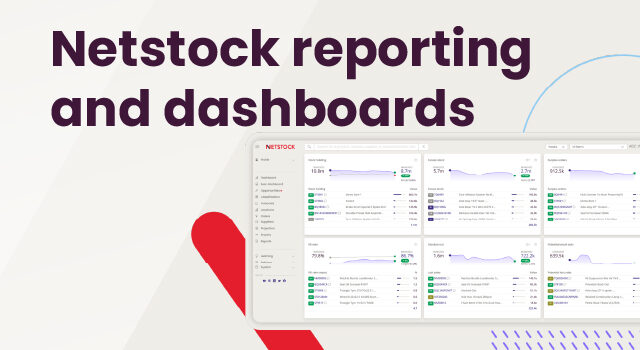
Connecting the plan to your ERP means policies translate into actual purchase orders without manual re-entry. Platforms like Netstock integrate with ERPs, layering planning intelligence on top of your existing data, turning documented policies into automated recommendations.
5. Monitor, review, and adapt
Define the KPIs you’ll track: fill rate, forecast accuracy, inventory turnover, excess stock. Establish a cadence, weekly for high-velocity items, monthly or quarterly for the full portfolio. When metrics drift, investigate. Did demand shift? Did a supplier’s lead time change? Adjust policies accordingly. The plan is a living document.
Inventory planning methods that support smarter ordering
Most businesses use a combination of methods, applying different approaches to different item categories.
ABC analysis
ABC analysis categorizes items by their contribution to revenue or margin. A-items (typically 10-20% of SKUs generating 70-80% of value) get the most attention. C-items get simpler, less frequent review. The method focuses planning effort where it matters most.
Economic order quantity (EOQ)
EOQ is a formula that calculates the order quantity minimizing total ordering and holding costs. It works well for items with stable, predictable demand. The limitation: EOQ assumes demand is constant, which rarely holds for seasonal or promotional items.
Just-in-time (JIT) inventory
JIT means ordering only what you need, when you need it. The benefit is lower carrying costs. The risk is higher exposure to supplier delays or demand spikes. JIT works best when suppliers are reliable, and demand is predictable.
Safety stock and reorder point planning
Safety stock and reorder points work together. The reorder point triggers an order; safety stock absorbs variability until that order arrives.
| Method | Best for | Tradeoff |
| ABC analysis | Prioritizing planning effort | Requires accurate sales data |
| EOQ | Stable, predictable demand items | Less effective for volatile demand |
| Just-in-time | Low-margin, high-turnover items | Relies on supplier reliability |
| Safety stock + reorder point | Variable demand or lead times | Higher inventory carrying cost |
How demand forecasting shapes the plan
Your inventory management plan is only as good as your demand forecast. If the forecast is off, safety stock calculations, reorder points, and order quantities all inherit that error.
Knowing how to forecast demand accurately directly affects cash tied up in stock. Overforecast, and you build excess inventory. Underforecast, and you face stock-outs.
For items with volatile or seasonal demand, machine learning can improve accuracy by detecting patterns that simple averages miss. Netstock uses intelligent machine learning algorithms to learn from massive amounts of supply chain data and handle promotions, seasonality, and trend shifts, adjusting forecasts as new data arrives.
How replenishment and ordering fit into the plan
Replenishment is where the plan becomes action. The policies you documented (reorder points, order quantities, safety stock) and AI-powered replenishment solutions translate into purchase or production orders.
Automated ordering, based on the plan’s policies, reduces manual work and ensures consistency. Exception-based review lets planners focus on problems (a supplier delay, a demand spike) rather than routine orders. Netstock generates prioritized order recommendations and feeds them back to the ERP, so the plan and execution stay connected.
The role of ERP data and AI in modern inventory planning
ERP systems hold transactional data: sales history, stock levels, open orders, supplier records. What they typically lack is planning intelligence, the ability to forecast demand, calculate safety stock, or surface risks before they become problems.
An inventory management plan bridges this gap. It takes ERP data and applies policies, forecasts, and business rules to generate actionable recommendations.
AI-powered inventory management software adds another layer. It can scan inventory data across all locations and surface opportunities (potential stock-outs, excess inventory, missed sales) that manual review would miss.
- ERP data: Sales history, stock levels, open orders, supplier records
- Planning layer: Forecasts, policies, safety stock calculations, order recommendations
- AI insights: Automated identification of risks and opportunities across all SKUs and locations
“We invest in technology to work smarter, not harder. Netstock helps us do exactly that.” – Jared Ramkellowan, IT and Operations Manager at CC1 St. Maarten
KPIs to measure whether your inventory plan is working
Here are some important inventory metrics to track. Each one helps tell you if the plan is delivering results or where it requires adjustment.
Fill rate and service level
Fill rate is the percentage of customer orders fulfilled from available stock. It measures whether your plan protects availability. A declining fill rate signals that safety stock or reorder points may be too low.
Forecast accuracy
Forecast accuracy compares actual demand to predicted demand. Poor accuracy means safety stock and ordering policies are working with bad inputs. Track inventory forecasting accuracy monthly and investigate large variances.
Inventory turnover and days on hand
Inventory turnover measures how often stock is sold and replaced in a period. Days on hand is the inverse: how many days of supply you’re holding. High days on hand may indicate excess or slow-moving stock.
Excess and obsolete stock
Excess stock is inventory beyond what demand requires. Obsolete stock is inventory that’s no longer sellable. Both represent cash that could be deployed elsewhere. The plan includes rules for identifying and addressing excess and obsolete items.
Working capital tied up in inventory
Connect inventory value to cash flow. Reducing excess stock releases working capital for operations, growth, or debt reduction.
Comparing your KPIs to industry benchmarks
Netstock’s Benchmark Report tracks inventory turnover, service levels, and excess stock across thousands of businesses. Comparing your metrics to industry peers helps identify where your plan is strong and where it requires work.
Turning your inventory management plan into action
A plan only works if it’s executed and reviewed. The steps are straightforward: document your policies, connect them to your ERP, automate and optimize with technology where possible, and review regularly.
For teams still relying on spreadsheets, the gap between plan and execution is often where things break down. Purpose-built planning platforms help align documented policies with action that supports the business by turning inventory management plans into automated recommendations, surfacing exceptions, and tracking KPIs in real time.