In a fluid supply chain, demand planners must level-up their processes, embrace modern AI-driven solutions, and lean into adaptability as a way to keep up.
The “return to normal” everyone expected in 2025 never arrived. Tariffs, which affected 63% of SMBs, according to the 2025 Benchmark Report, escalated instead of stabilizing.
It wasn’t that long ago that you implemented your new enterprise resource planning (ERP) system at work, right? If so, why does it feel like a lifetime?
Over the last year, supply chain teams across industries faced relentless challenges: tariffs shifted mid-quarter, key suppliers missed lead times, and financing pressures forced sudden operational pivots. For SMBs, the lesson was clear: Risk can’t be avoided, but it can be anticipated.
Growing businesses know the feeling. Your ERP holds all the data you need, but extracting meaningful insights from it requires manual effort, fragmented reports, and educated guesswork.
Uncertainty has become the defining characteristic of modern supply chains. Tariffs shift without warning, suppliers miss lead times, demand spikes unexpectedly, and financing conditions tighten overnight.
Picture this: Your shiny new AI forecasting tool confidently predicts you’ll need 10,000 units of Product X next month. You trust the algorithm, place the order, and then reality hits.
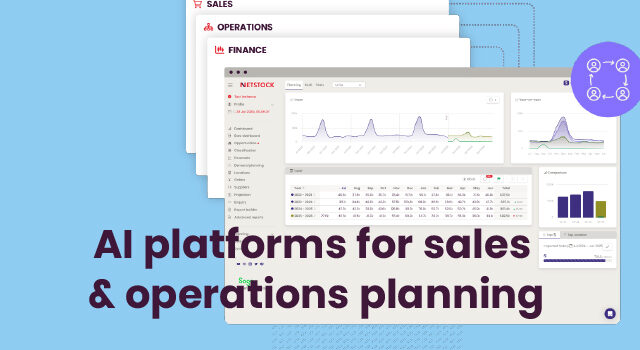
Discover how Sage ERP forecasting tools become more powerful with AI. Learn how Netstock’s Sage AI integration helps SMBs gain competitive advantage through smarter planning.
Adding AI into supply chain planning isn’t about chasing the latest trend fueled by buzzwords. Making the change brings measurable returns that stakeholders can track and teams can feel.
Sorting through spreadsheets is a painful reality for many CFOs and stakeholders. Even if your planners took the steps to create visual dashboards, you might be stuck with a headache, worrying if human error lurks hidden in the data.
Every factory has a rhythm. Raw materials arrive, machines run, shifts roll on, and products ship out the door. But when demand spikes, machines go down, or labor is stretched thin, that rhythm can fall apart.
Unpredictable supply chains require accurate demand forecasting. Accurate forecasting can mean the difference between hitting service targets and missing opportunities.
Seasonal demand planning is one of the biggest challenges in the home furnishings sector.Furniture and home goods wholesalers and distributors juggle long lead times, bulky SKUs, and unpredictable sales spikes tied to promotional events and seasonal shifts.
Discover why 78% of SMBs struggle to implement effective tariff responses and learn practical strategies to overcome organizational barriers and technology gaps.
Accurate demand forecasting allows businesses to meet customer demand without risking stock-outs. If forecasts underestimate demand, businesses risk stock shortages, which can lead to missed sales and dissatisfied customers.
Predictive analytics has reshaped the modern supply chain and provides key insights that help anticipate demand, optimize inventory, and streamline logistics.
Forward-looking resilience strategies businesses can implement amid the International Longshoremen’s Association (ILA) port strike, impacting ports across the East and Gulf Coasts.